Telugu Wedding Rituals Through The Lens: Moments Worth Capturing
From the Pellikuthuru ceremony and Mangala SnanamAcross India, a wedding is celebrated like a beloved festival, and the traditional Telugu wedding is no exception. In the eyes of ritual, the couple is the divine couple, Lakshmi and Narayana, and in the arms of family, they are simply human. Every step into this tradition is one of deep spiritual significance and comes with a history of beauty, responsibility, and the changing tide of new life. Customs, traditions, their order, and interpretation vary across Telugu families and regions. This guide is meant to take you through the common practices, offering an overarching route to a general Telugu wedding.
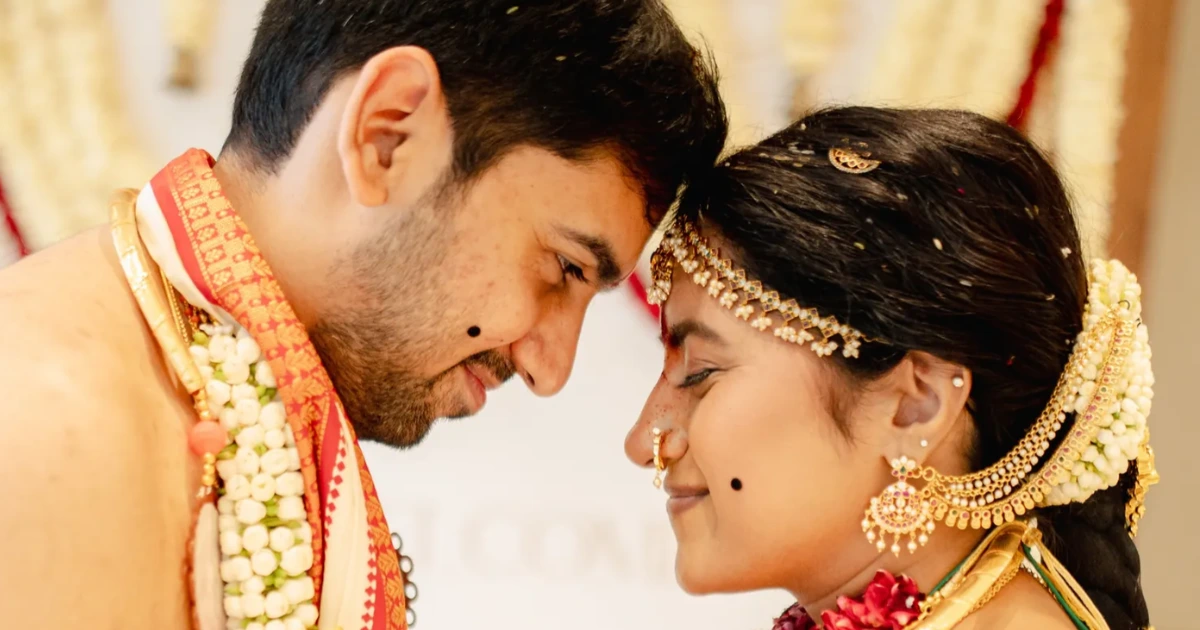
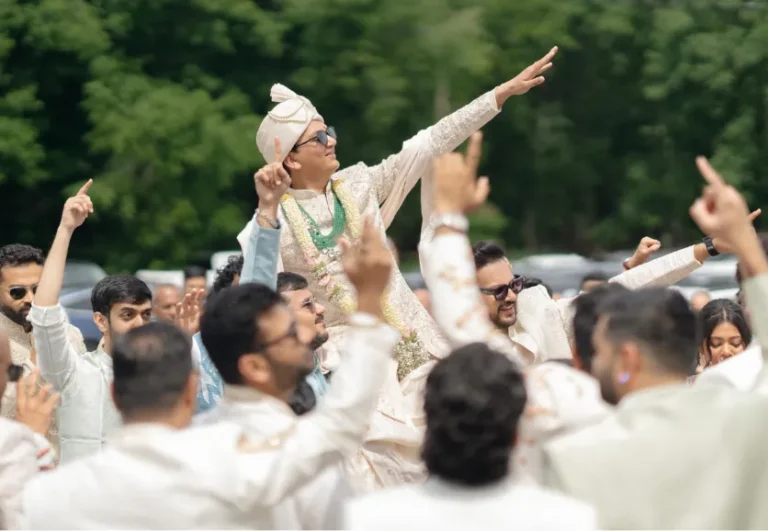
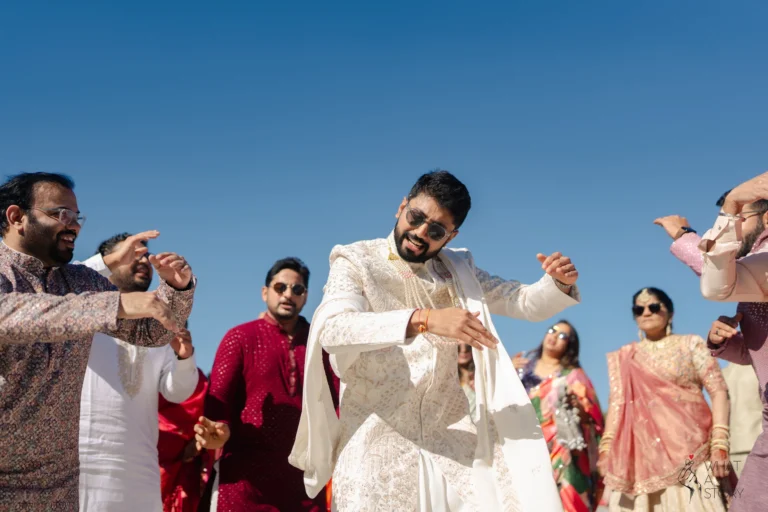
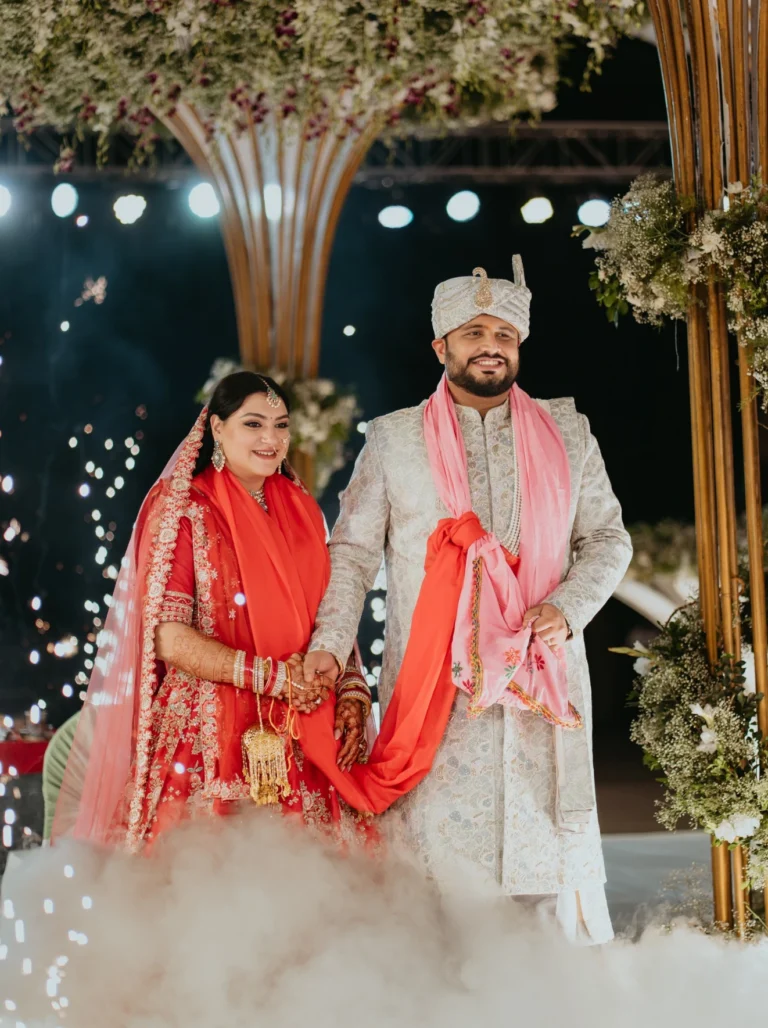
For couples planning to embark on Telugu wedding planning, understanding the traditions and rituals that come with it can make it feel more personal. For us, as photographers, they offer something just as special: fleeting expressions, family connections, sacred moments, and your anticipated smiles that you remember forever.
At What A Story, a Telugu wedding is more than one ceremony after the other. It is a story unfolding through generations, wrapped in moments captivated by faith and respect. Every ritual offers another moment to preserve, and we know just the teary eyes and the lump in your throat as you take in the entirety of this moment.
Pre-Wedding Rituals: The Start of A Divine Journey
Long before the wedding day itself, a Telugu wedding begins at home. These are the ceremonies where two families stop being two families, where dates are fixed, turmeric is ground, and the house fills with relatives who have known the bride and groom since they were small. Whether that house is in Hyderabad or a suburb of Dallas, the shape of these days is the same. They are quieter than what follows, and often the most tender part of the week.
Nischayathartham: A Promise
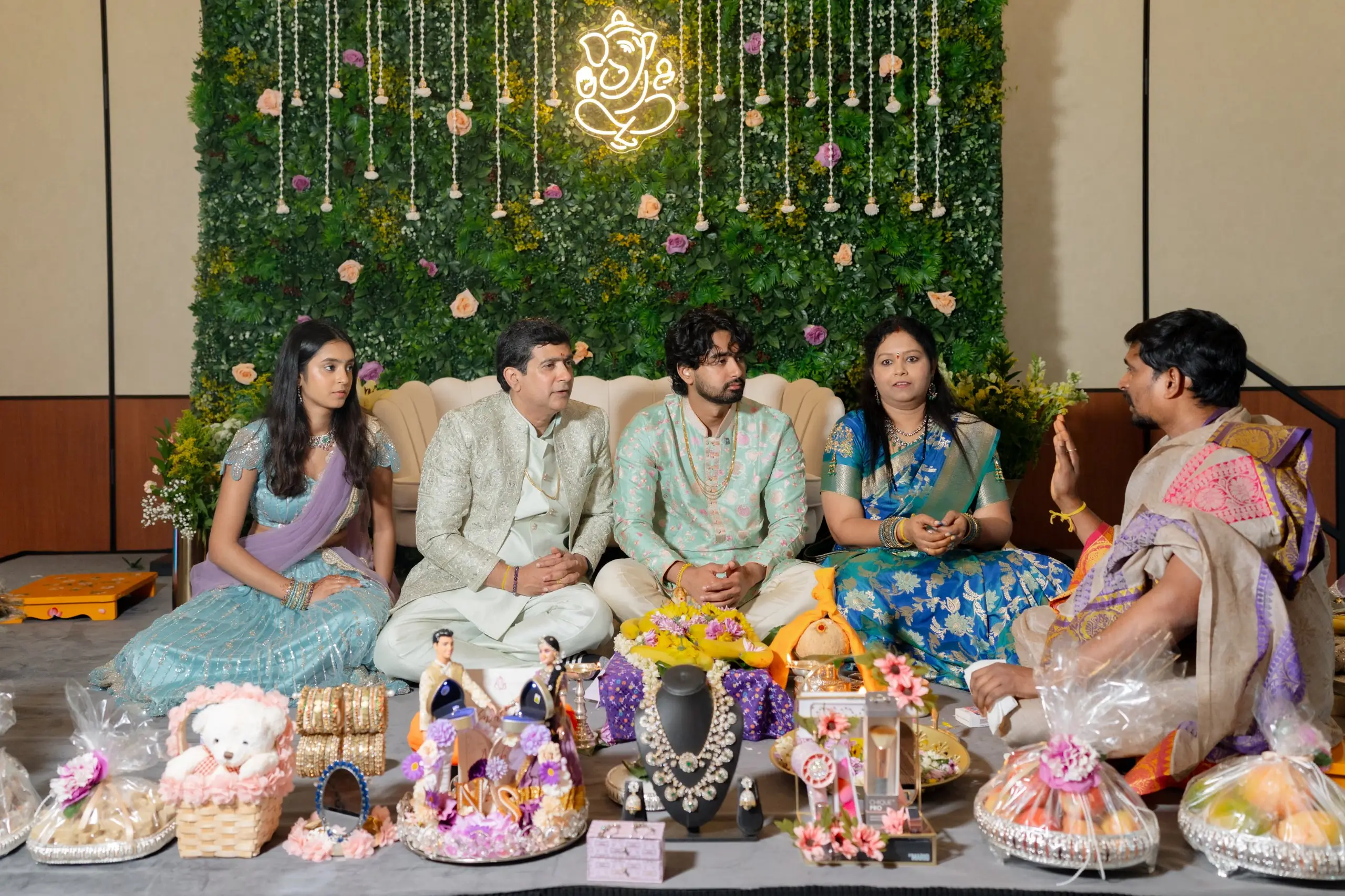
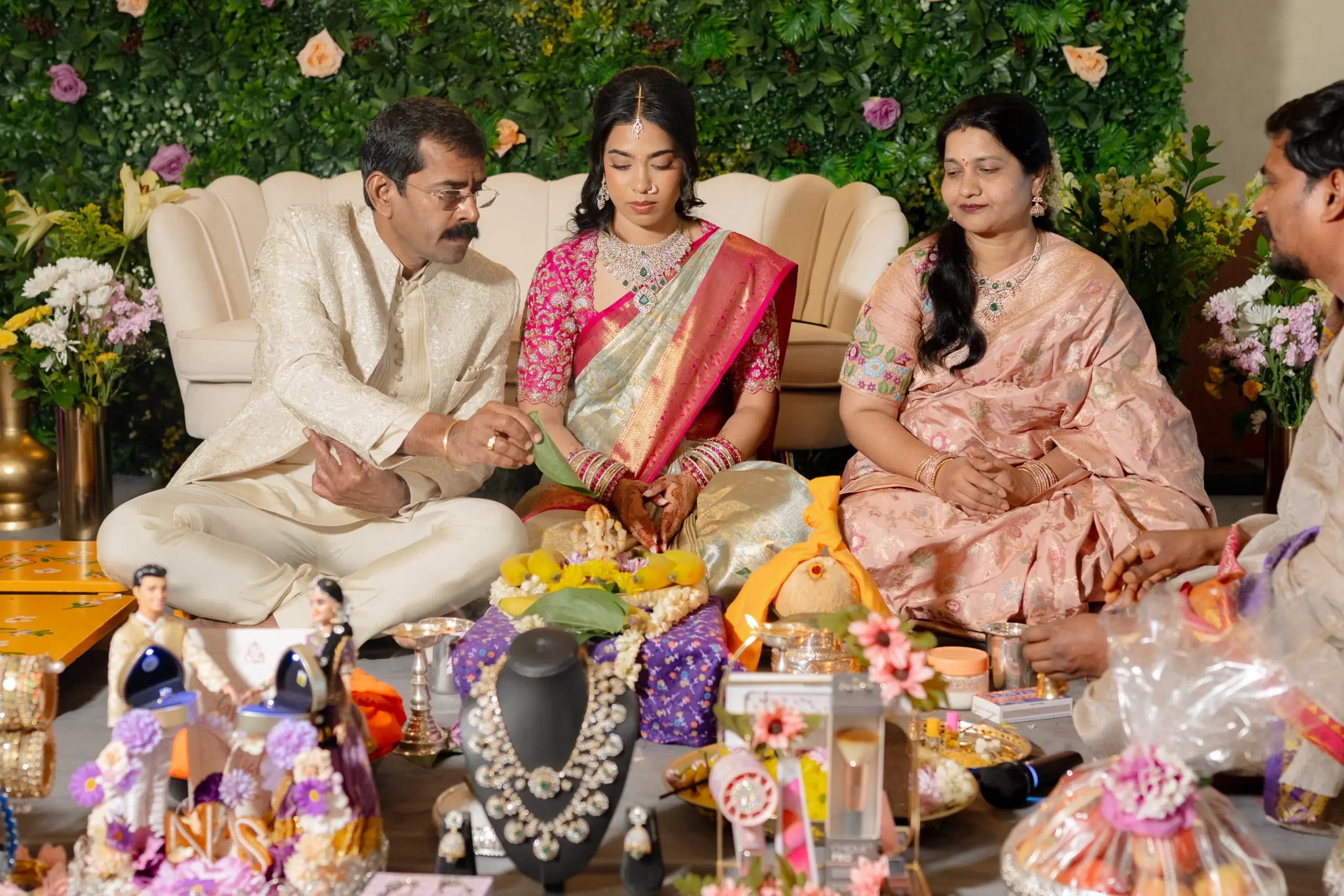
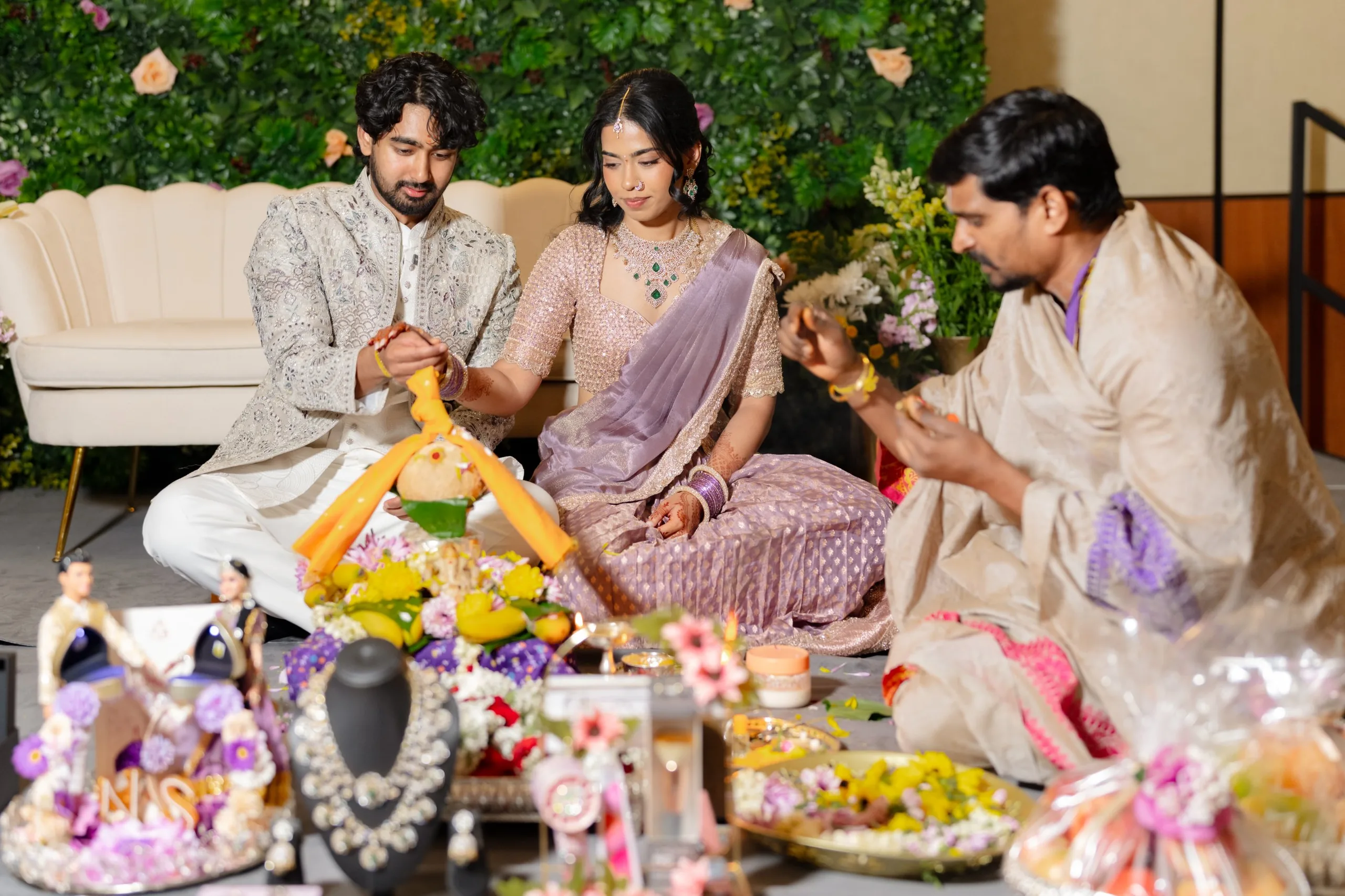
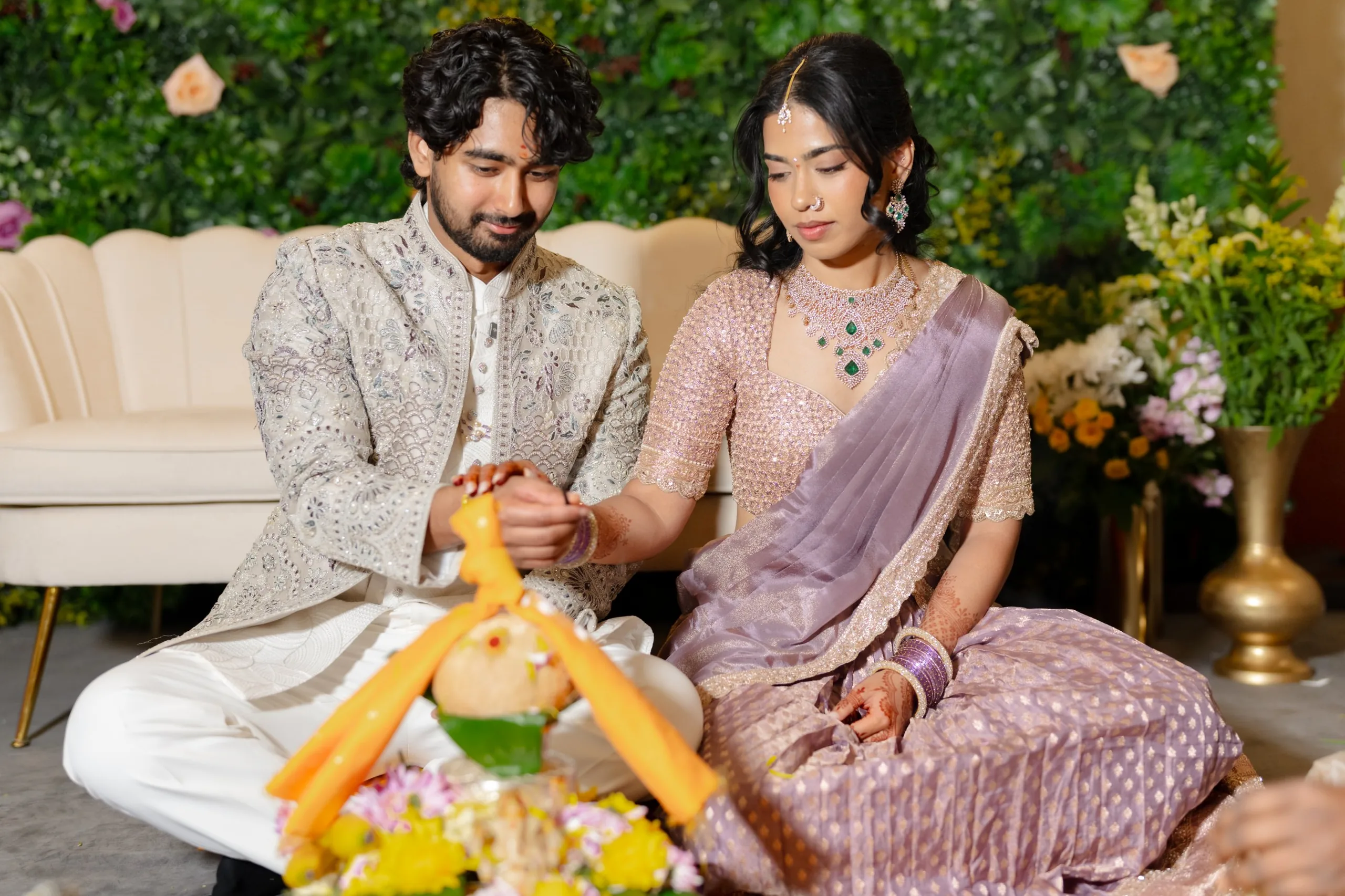
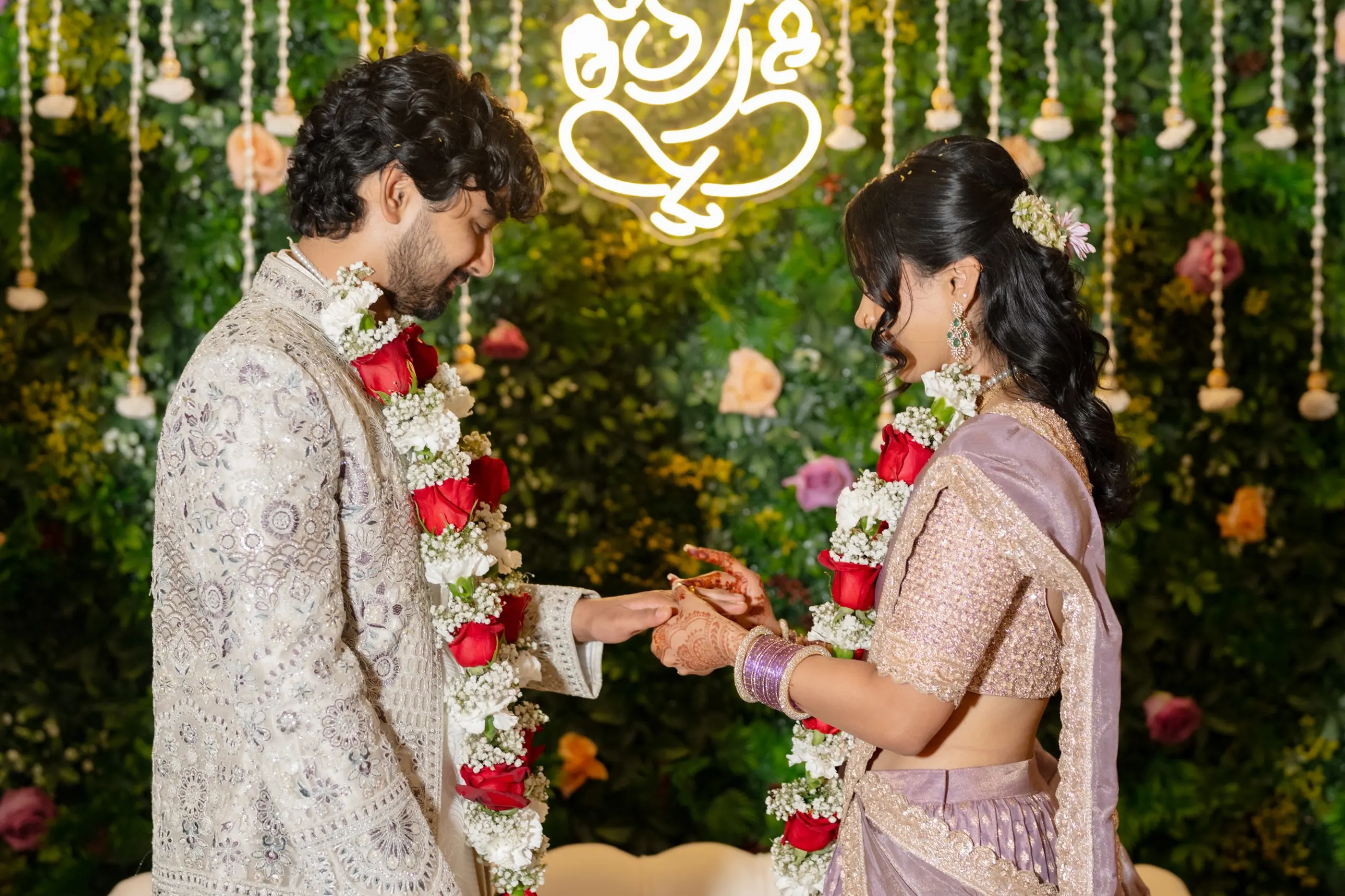
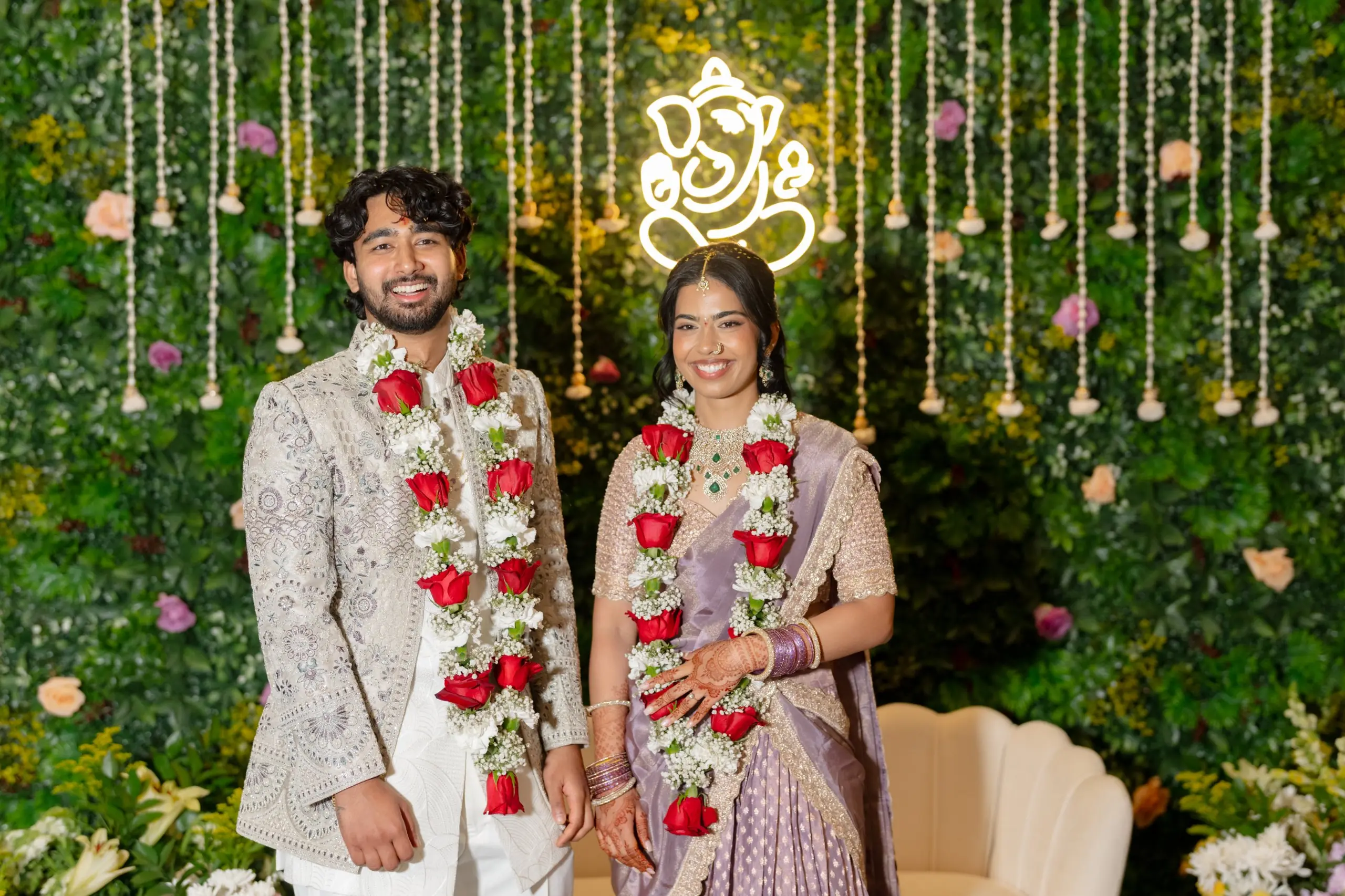
A formal engagement ceremony that confirms the marriage alliance between two families. It is sometimes likened to the exchange of rings in other cultures, but the significance lies in the formal commitment made by both families. The families exchange gifts, clothes, and jewellery, while the elders of the family bless the couple, and the wedding dates are formally decided and recorded.
It is a moment of anticipation where plans begin to take shape and families come together with a shared promise. The nischayathartham ceremony is full of understated emotions. Shy smiles, the excitement of a new start coming your way, the parents’ satisfaction at a match well made, grandparents happy to see their legacy go forward. These are details that help us tell the story of your wedding.
Pellikuthuru/Pellikoduku Cheyuta: A Step Forward
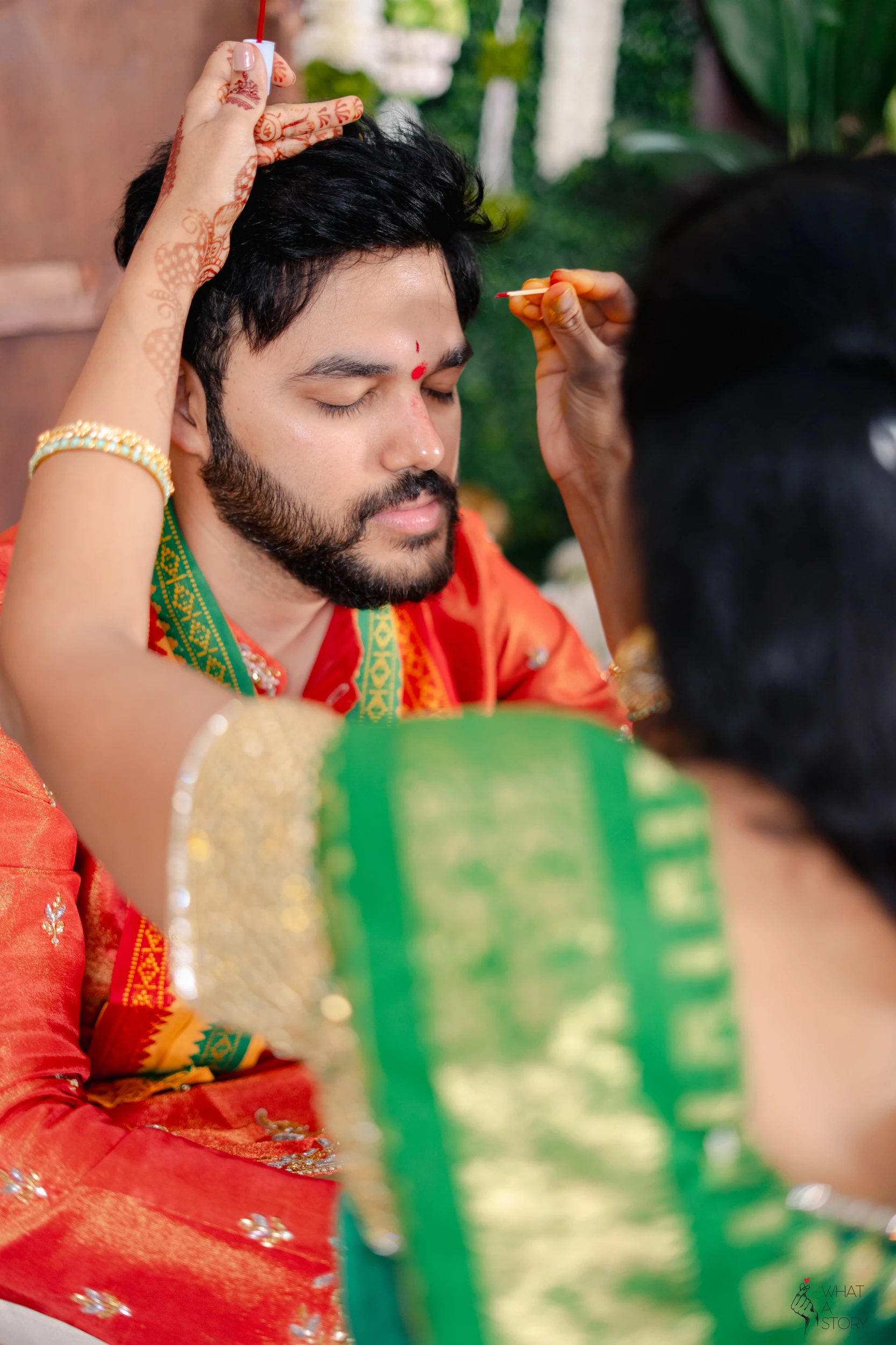
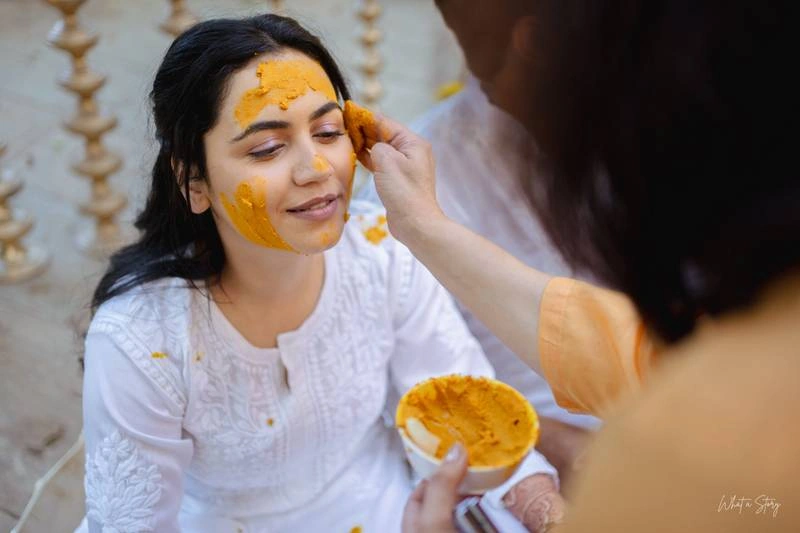
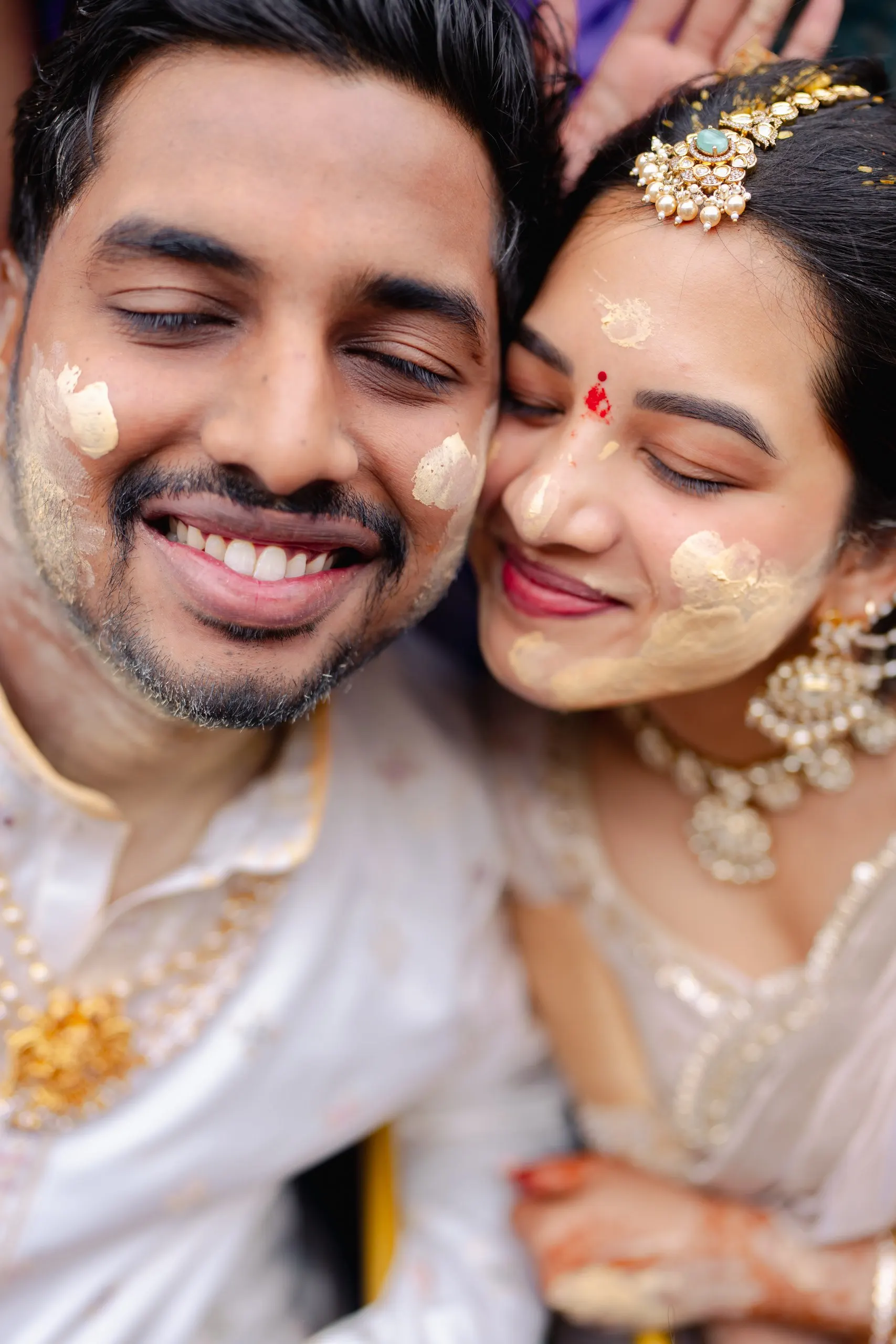
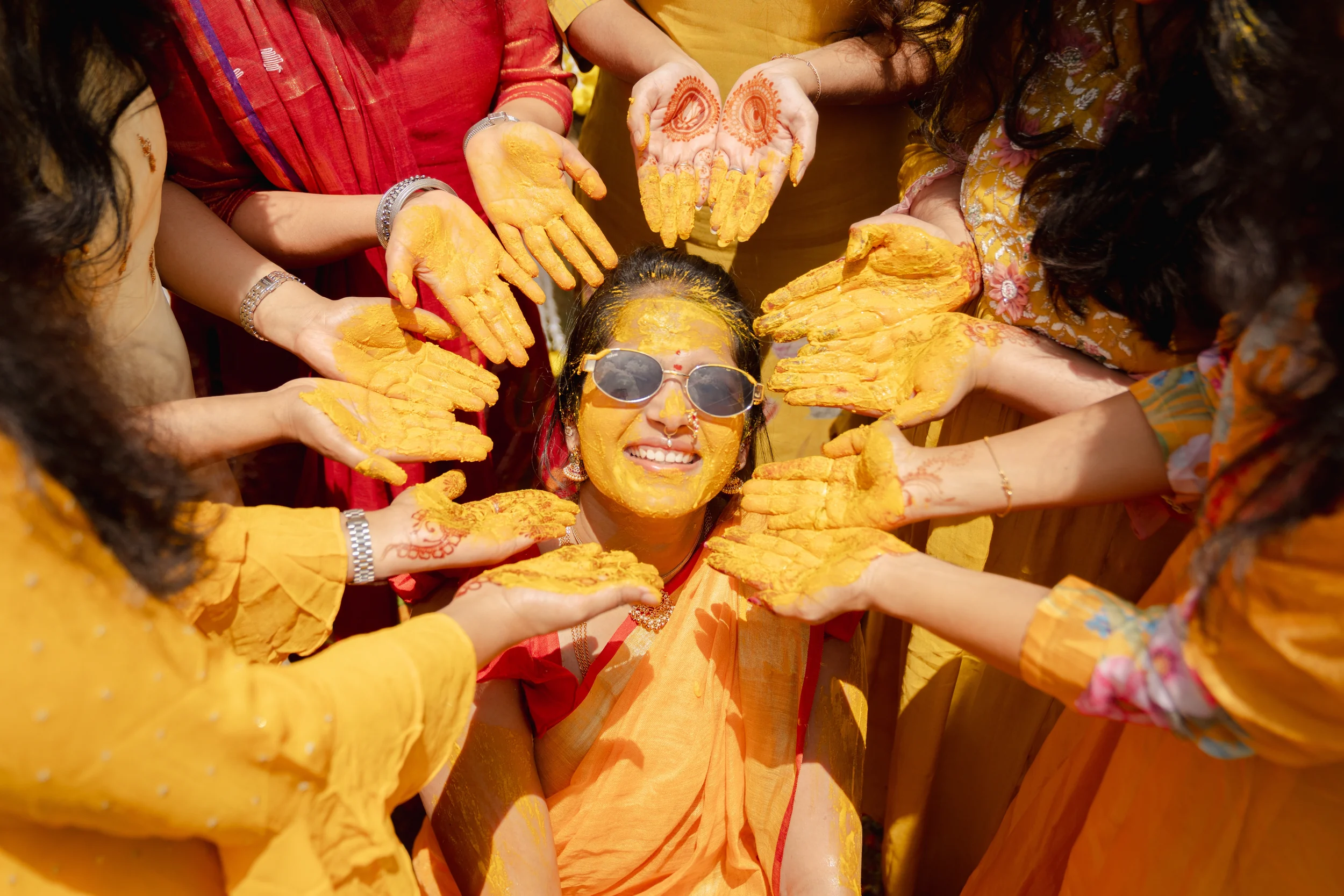
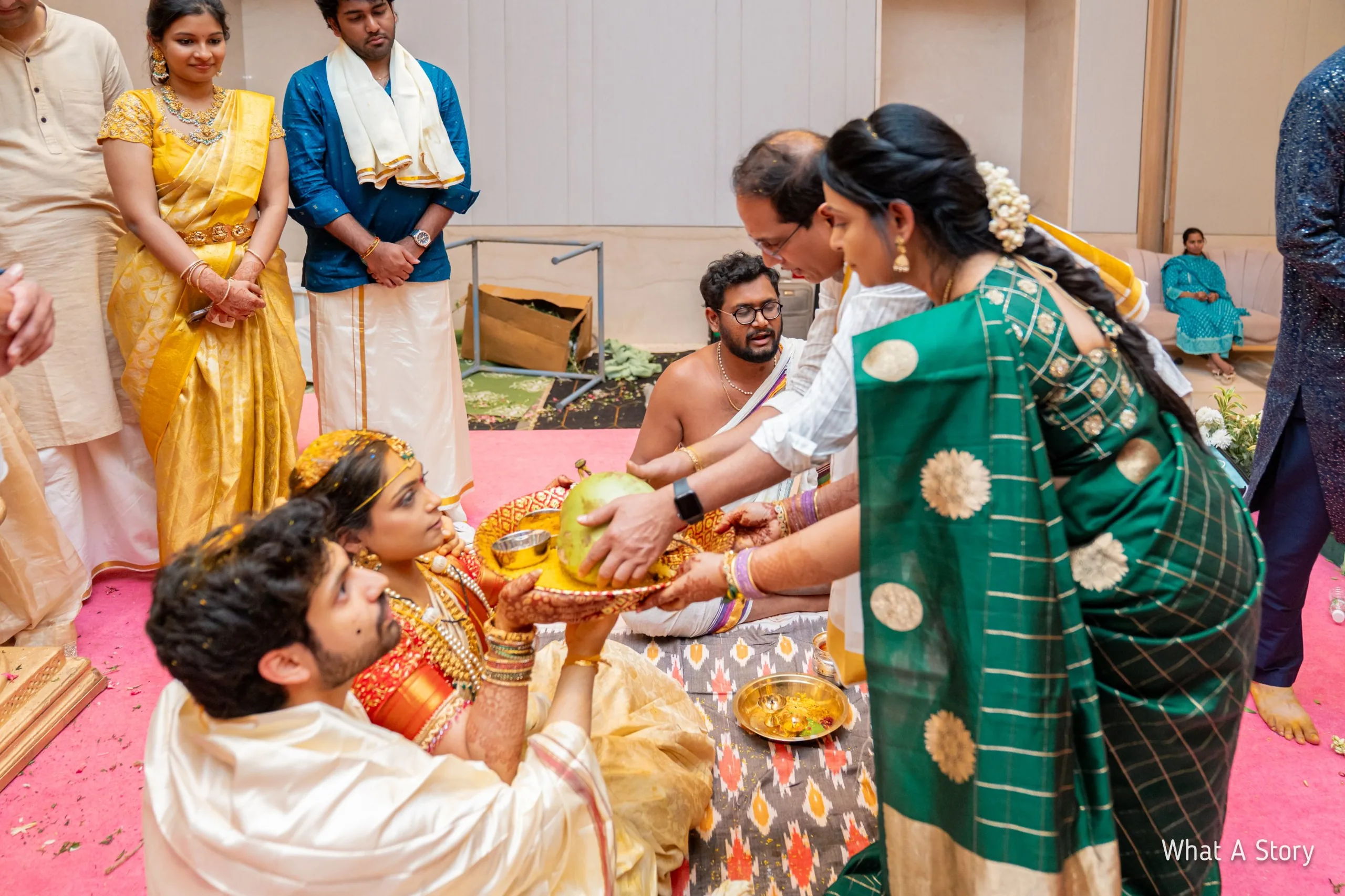
Pellikuthuru, for the bride, and Pellikoduku, for the groom, are traditional preparation ceremonies held before the wedding. They are often held separately at the couple’s respective homes, with new trends having the couple prepare together. Turmeric and oil are applied by family members, followed by blessings, a puja praying for peace and blessings, ceremonial bathing, and a change into traditional attire.
Turmeric has long held an important place in Indian wedding customs, associated with auspiciousness, purification, and well-being. The ceremony is also an opportunity for relatives to gather around the bride and groom before the larger festivities begin. This is a perfectly intimate ceremony, with the feeling of being cleansed and prepared for a new chapter being the centre of every blessing, positivity flowing like a river into the homes of celebrating families.
This is where the family shines, with all their love and sweetness. An aunt whose love flows into the turmeric applied, cousins teasing like they have grown up doing, a mother adjusting a bride’s saree to perfection after the chaos, a grandmother hovering over every step, wanting perfection for her child. A ritual that culminates the love gathered from the very beginning, the true blessing being the family huddled around you, laughter abundant.
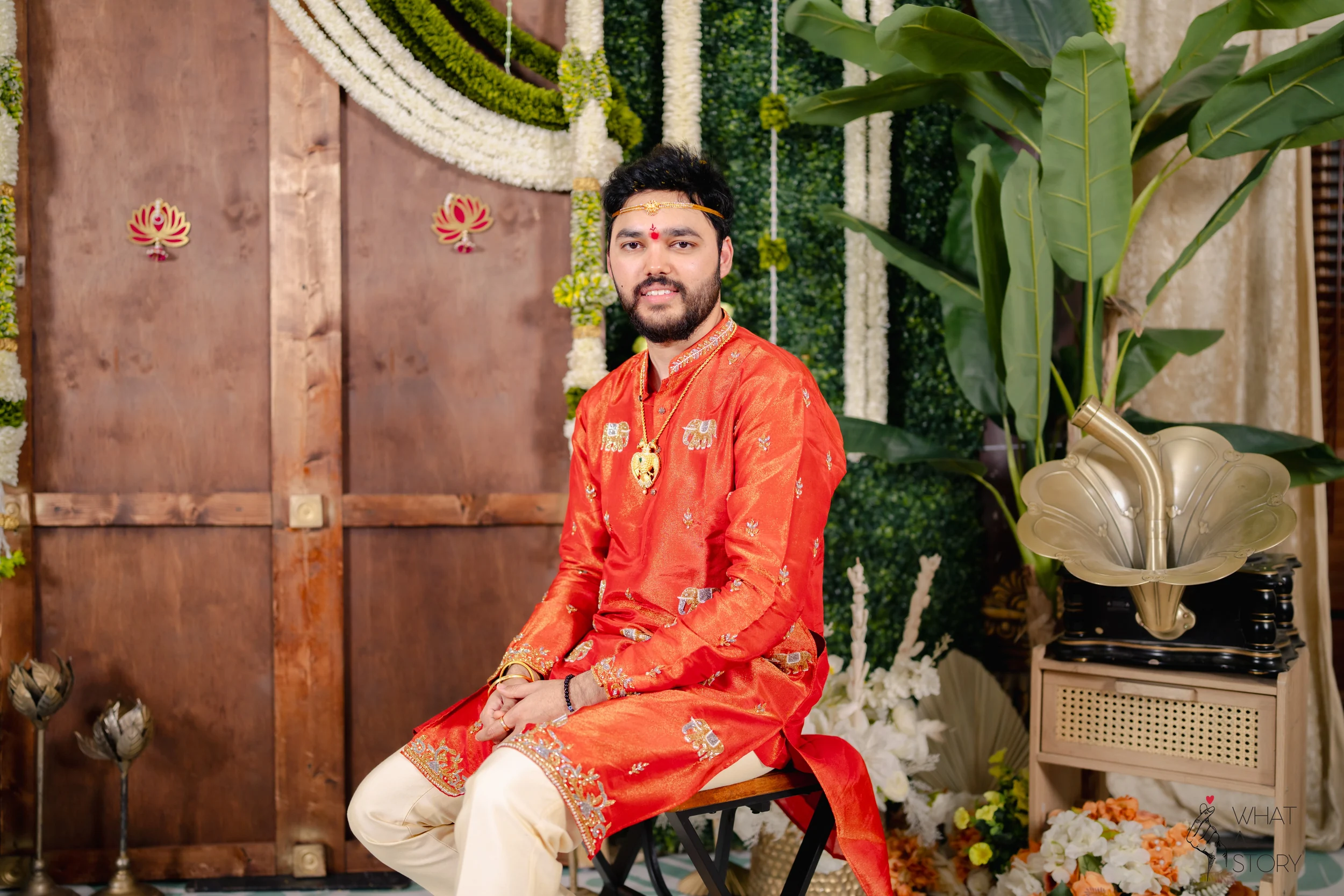
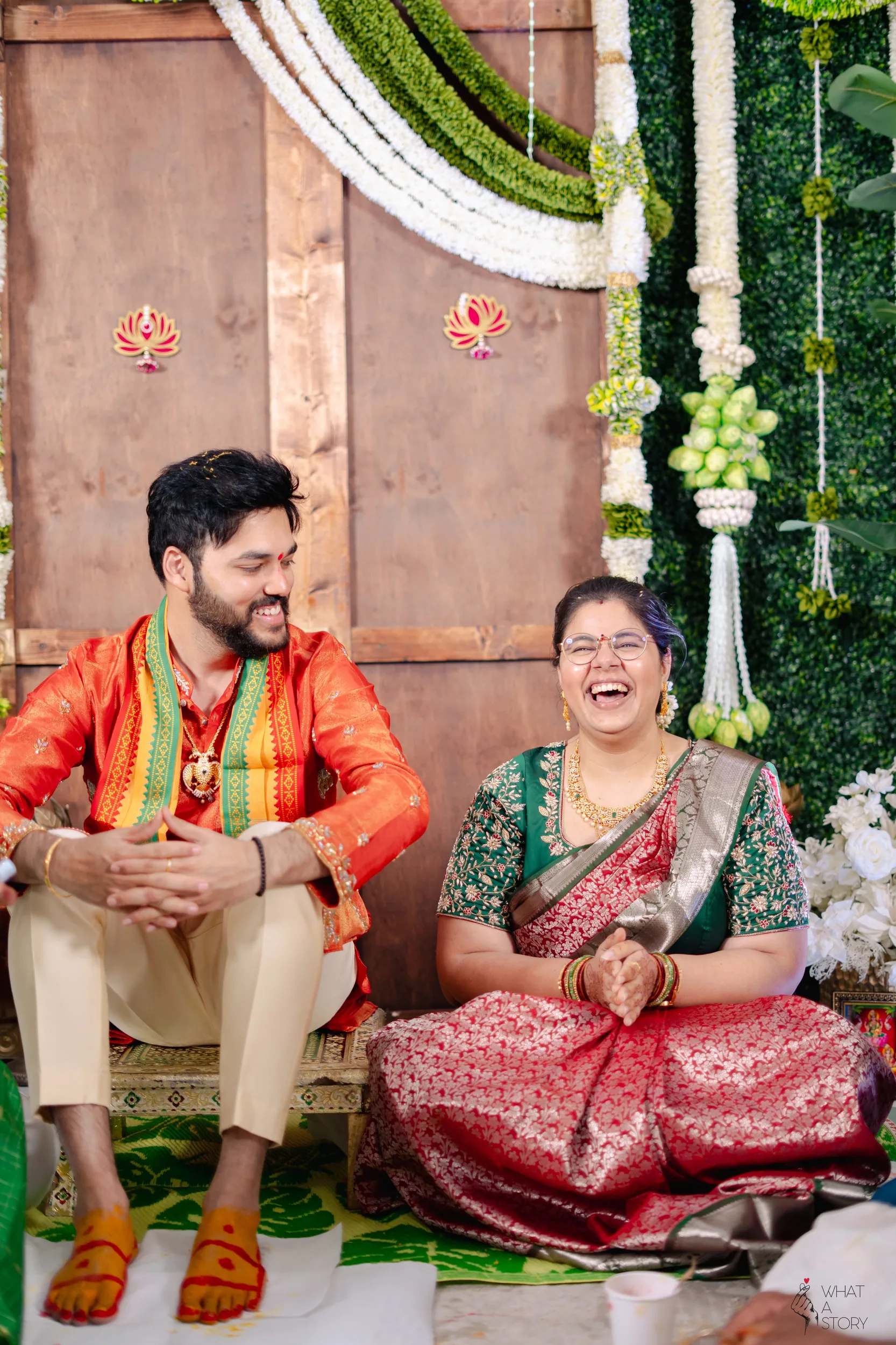
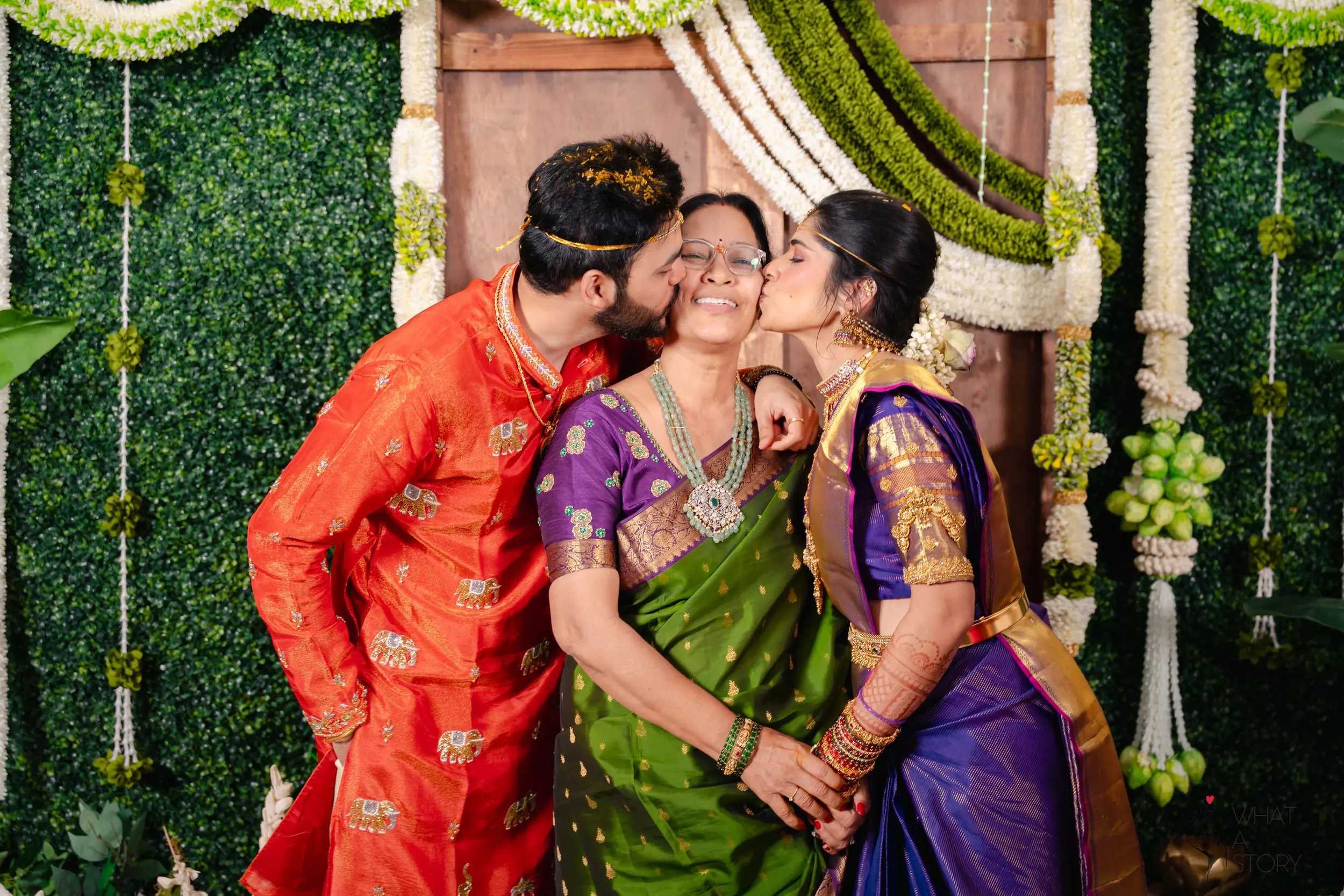
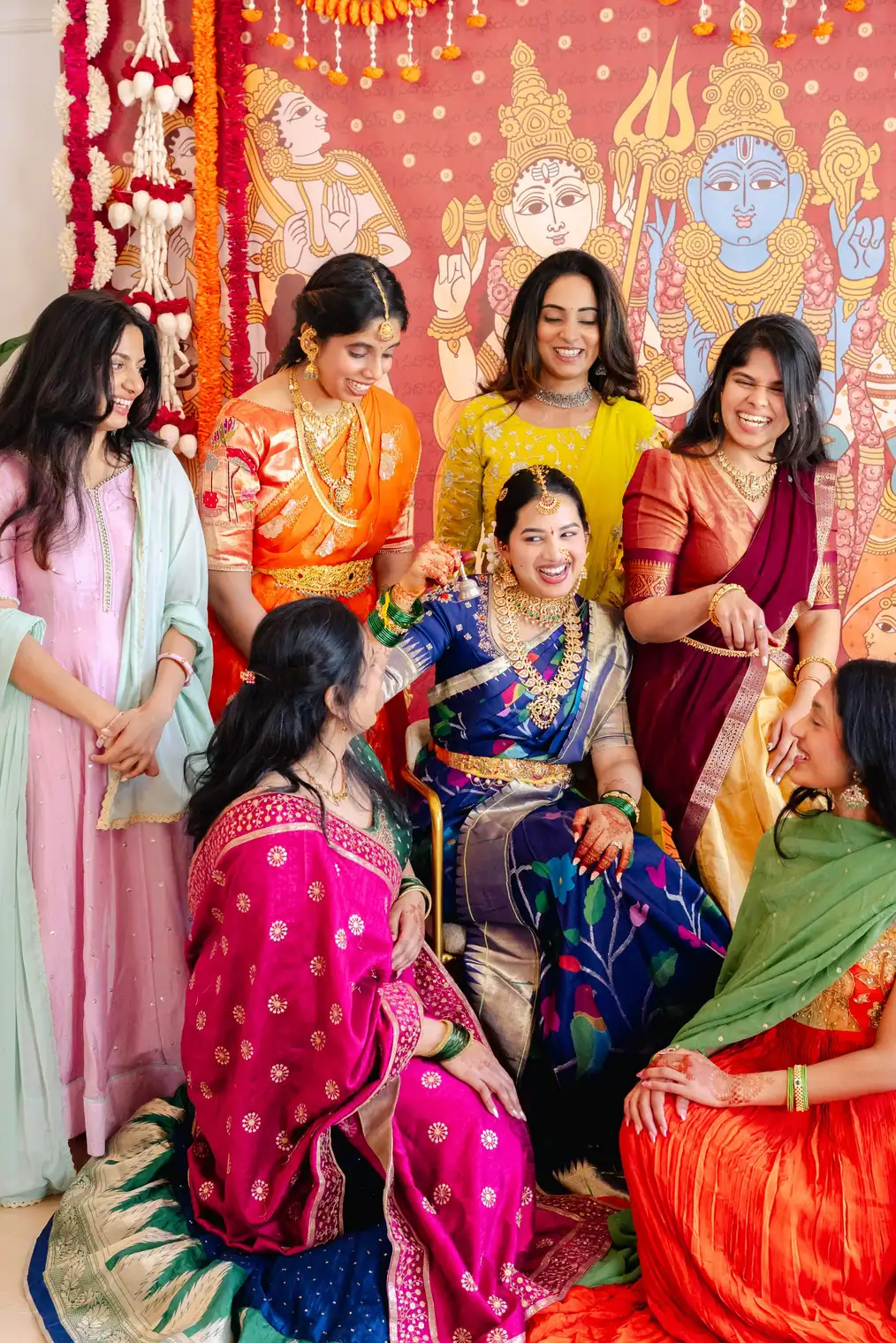
We know what is coming and roughly when. Which means the camera is already where it needs to be when the addutera comes down, rather than moving while it happens.
Wedding-Day Rituals: A Celestial Blessing
The wedding day in a Telugu household begins long before sunrise. The muhurtham is set by the stars rather than by convenience, which means the morning rituals often unfold in the dark, in a house still waking up, with only close family awake to see them. These hours are busy and unrepeatable, and they set the tone for everything that comes after.
Mangala Snanam: A Holy Beginning
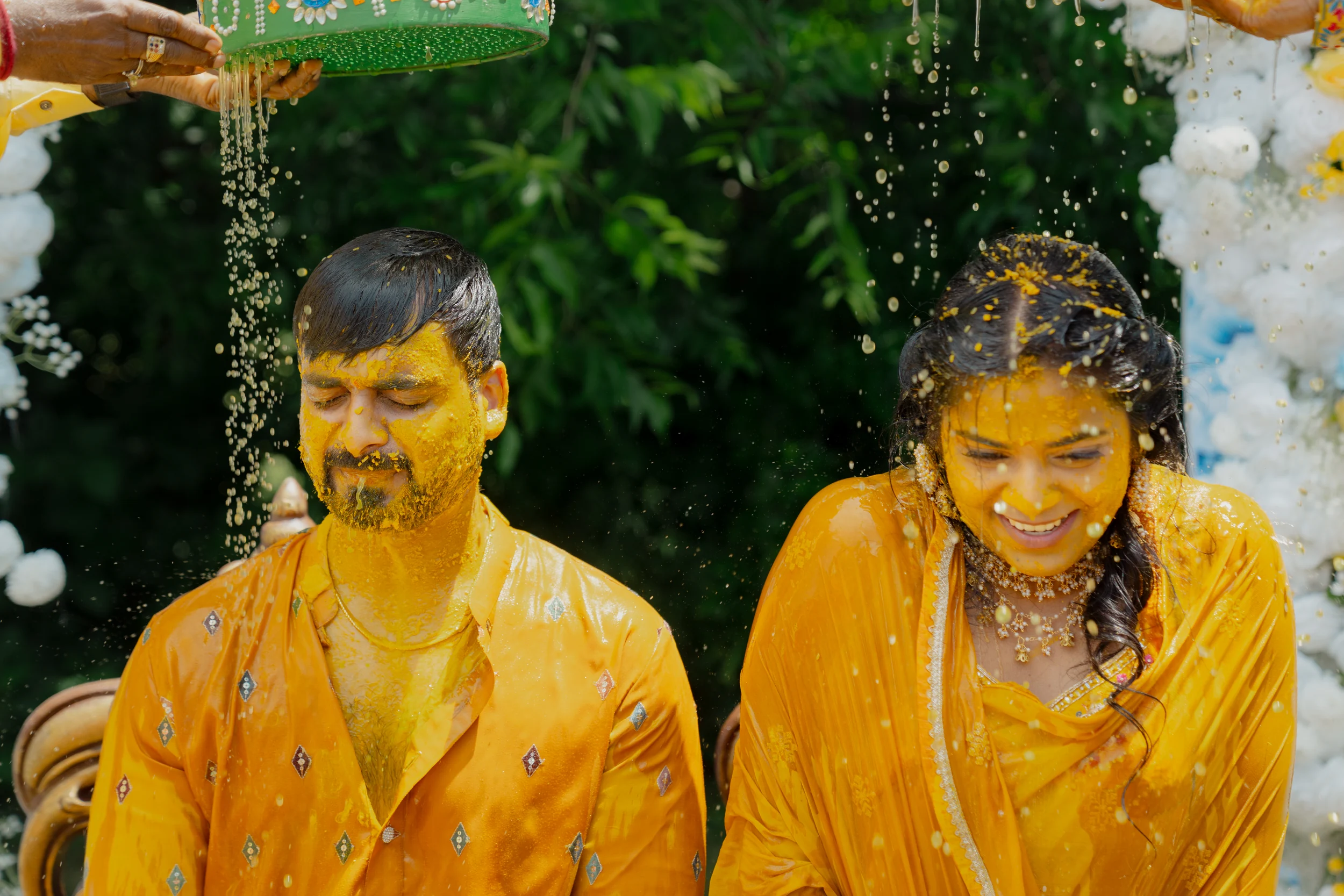
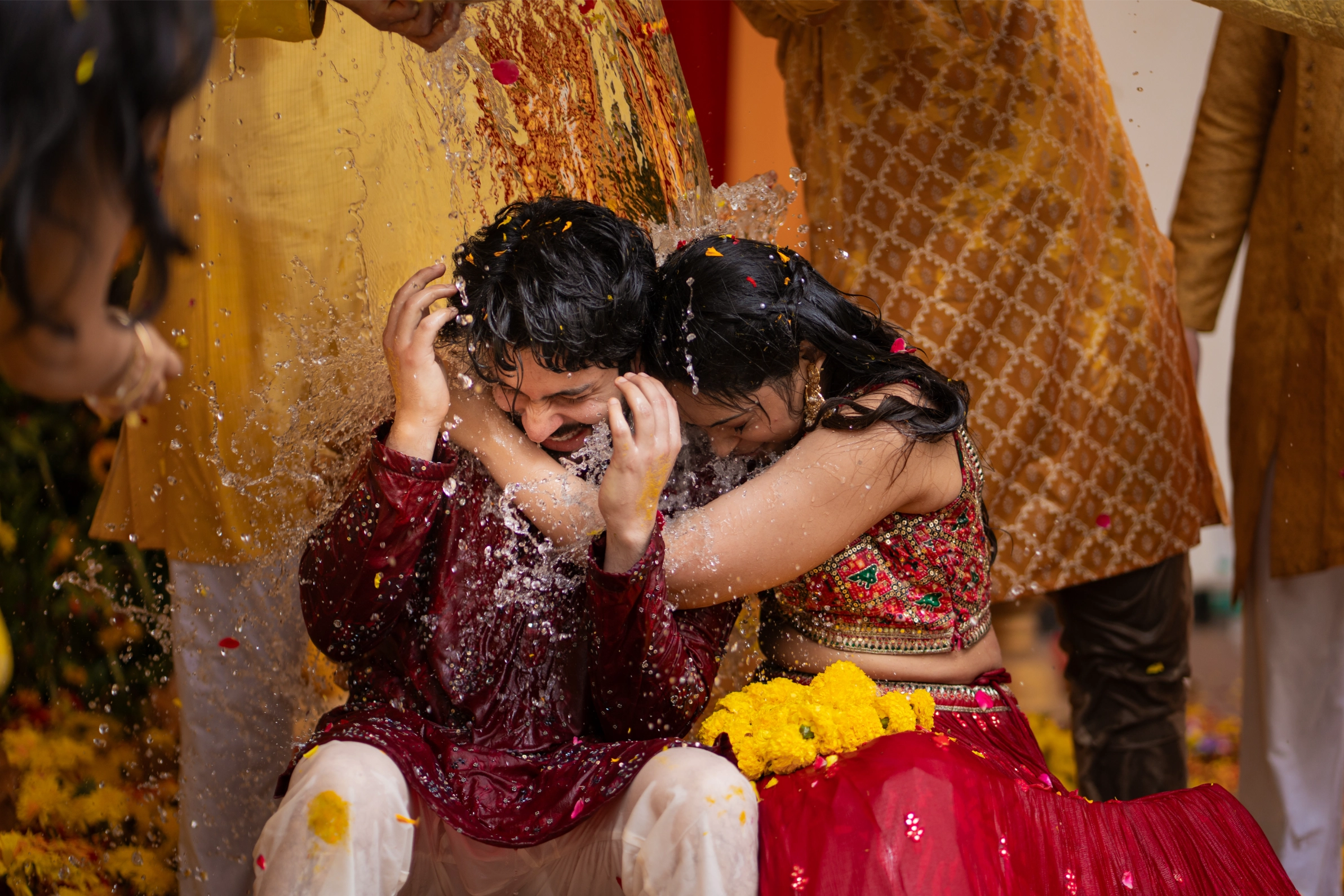
A ceremonial bath taken by the bride and groom before the rituals of the day. It is commonly associated with purification and the final step of preparation for the auspicious occasion ahead. Depending on family custom, this ceremony might take place as part of the Pellikuthuru/Pellikoduku cheyuta, or on the morning of the wedding itself. The ritual also marks a transition from the preparations of the previous days to the sacred ceremonies of the wedding day.
Attention to detail and comfort take center stage for this ceremony; it’s the last bit of time to yourself, as brides and grooms steel their nerves for the transition. Our details are centred around the water being poured, turmeric-stained hands, flowers, and tradition coming alive. This imagery preserves the intimate atmosphere of the morning.
Snathakam and Kashi Yatra: A Sacred Duty on Both Sides
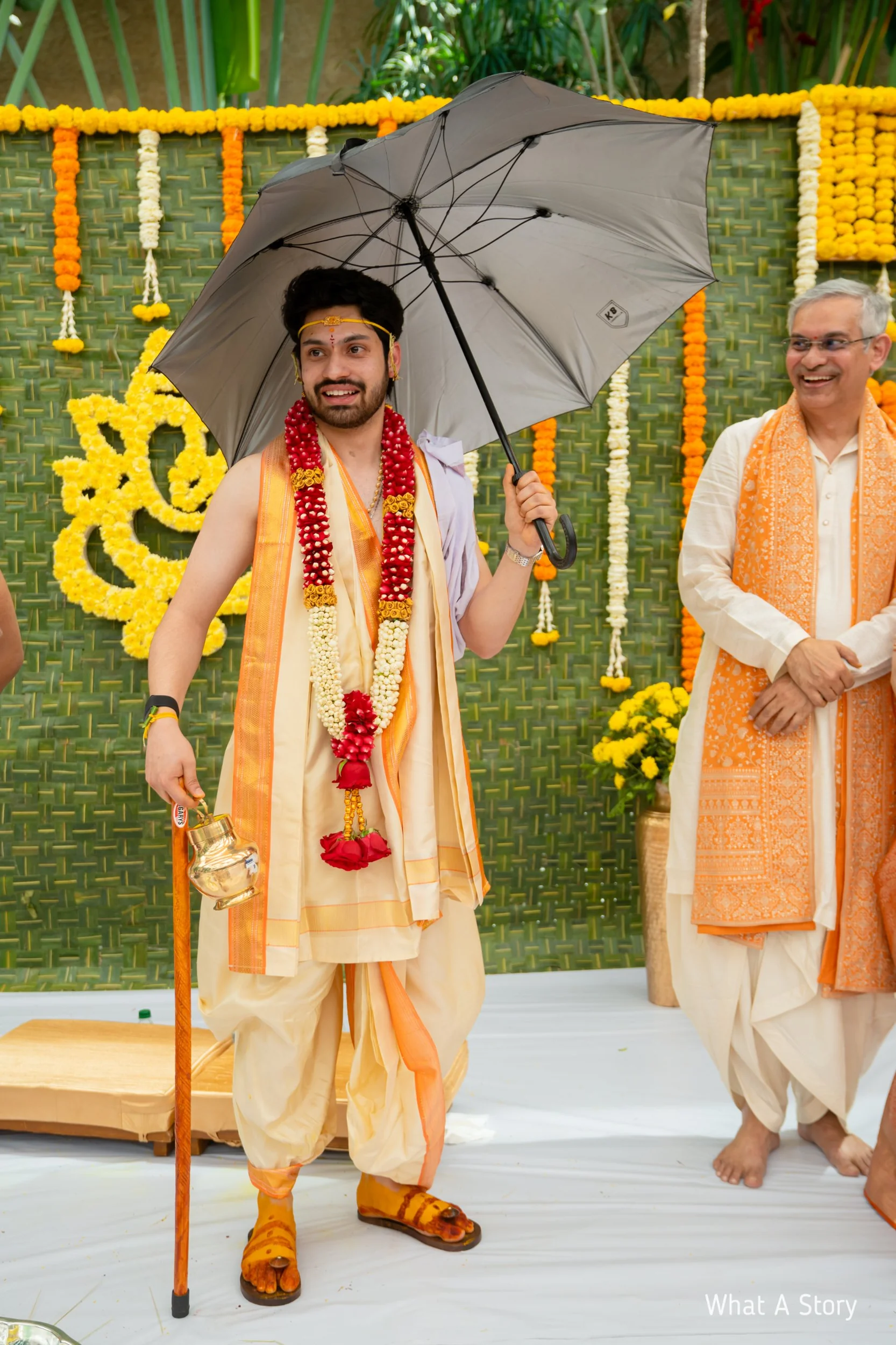
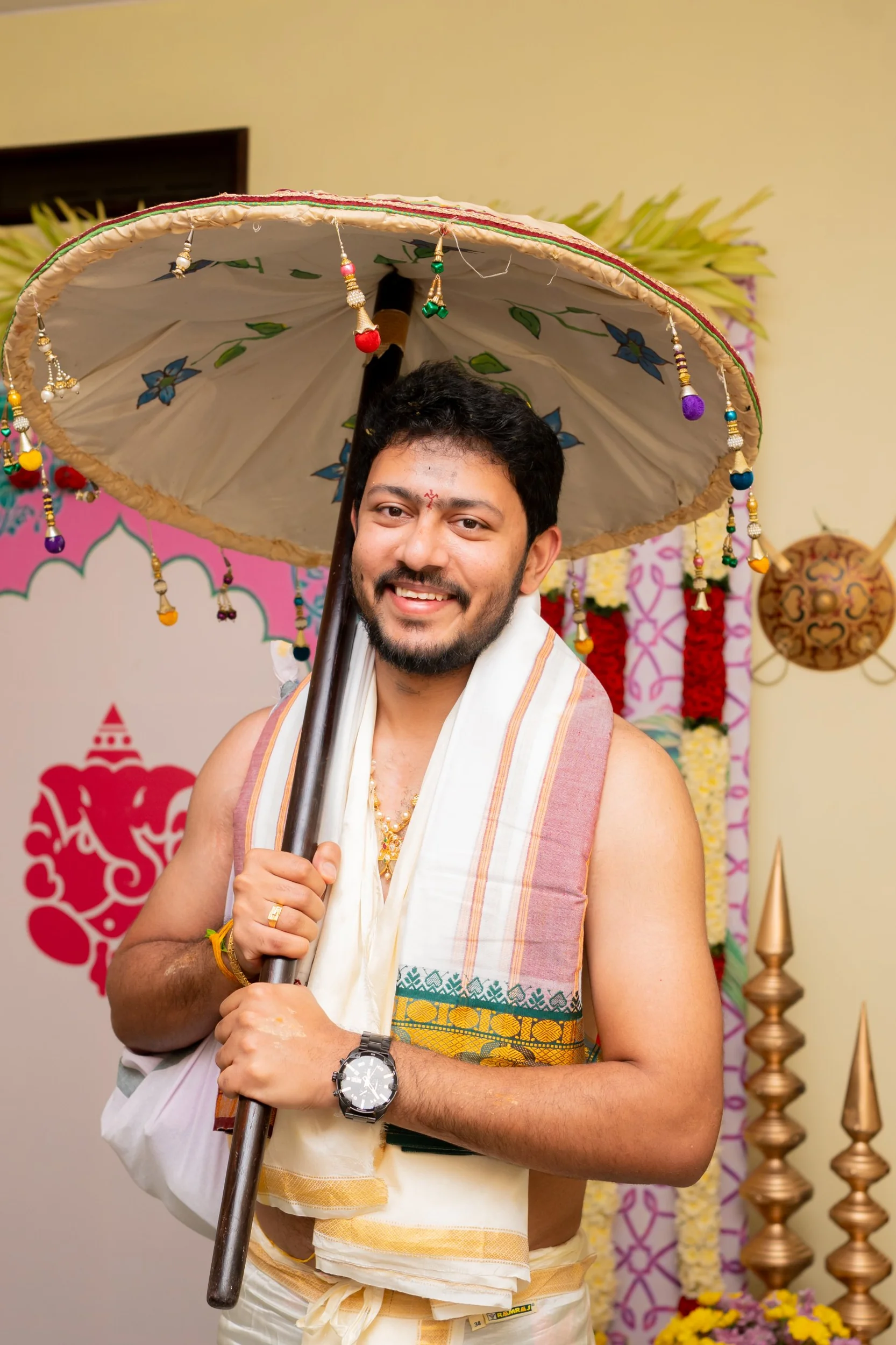
A Snathakam is a traditional rite associated with the groom’s preparedness and transition towards a household life. In some Telugu customs, it is followed by a Kashi Yatra, a jolly ceremony where the groom pretends to leave for Kashi to pursue the life of an ascetic instead of marriage.
The bride’s family, usually represented by her brother or maternal uncle, persuades him to choose the path of marriage instead of learning and spiritual discipline. Usually the most comedic part, creating a lighthearted atmosphere for the wedding to move ahead. The Kashi Yatra is a wonderful opportunity for candid storytelling. Genuine laughs, smiles, and every shenanigan that happens when the groom is dressed in his umbrella and walking stick. Walking away, family negotiating his return, and the expressions that turn the ritual into a memory for life.
Edurukolu, Gauri and Ganesh Puja: Welcoming the Auspicious
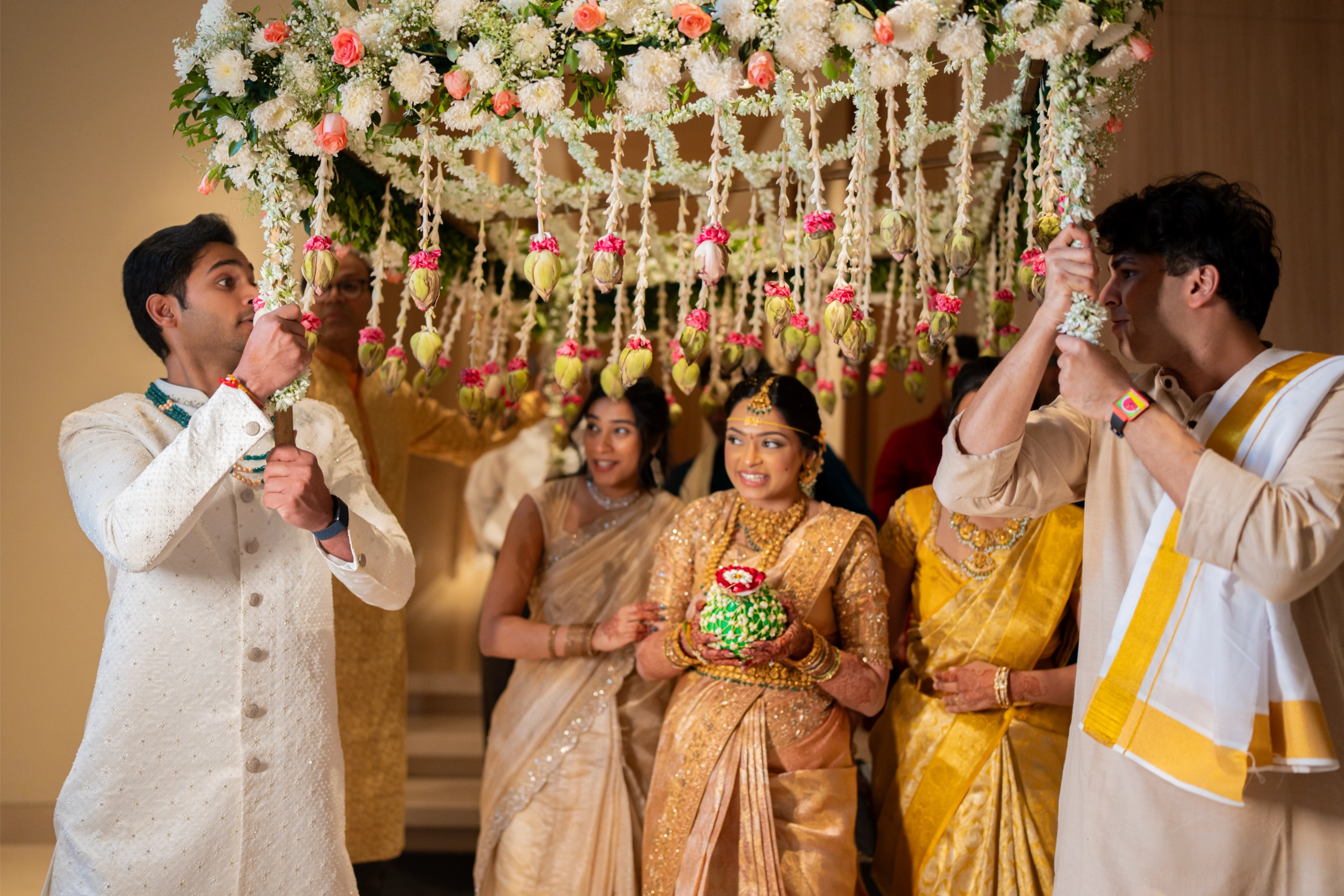
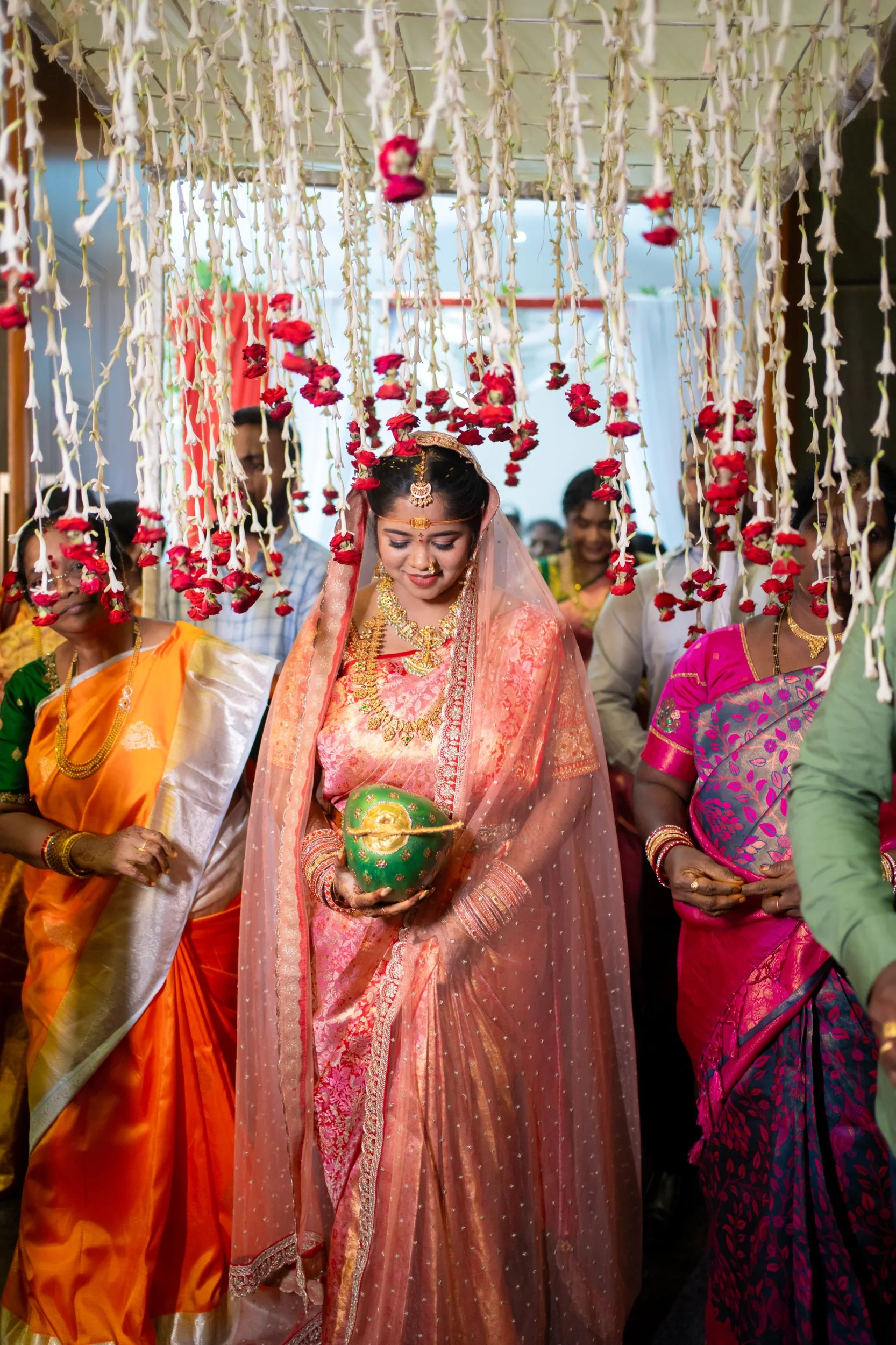
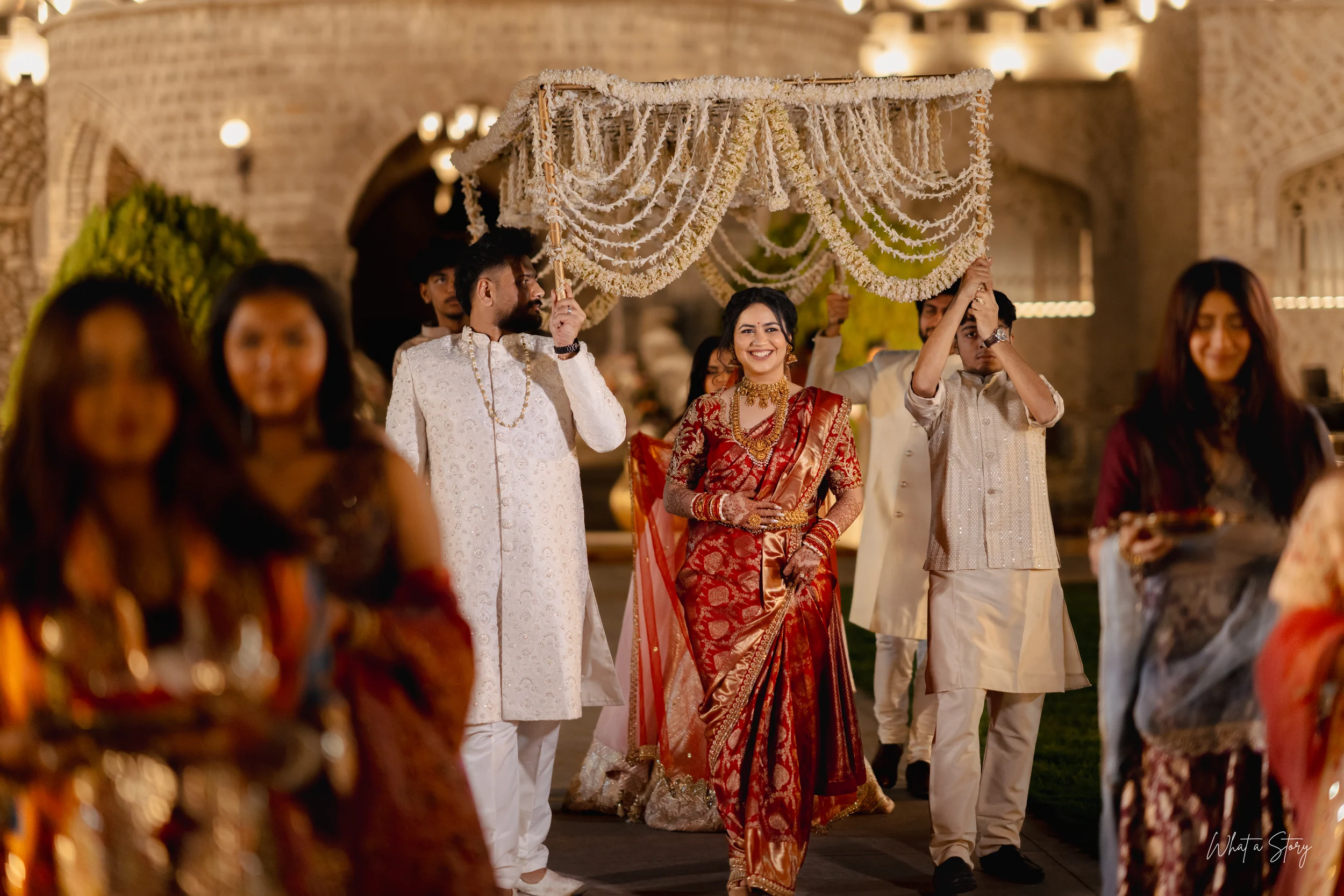
The ceremonies are meant to bring happiness, foster devotion, and thrive on prayer for auspicious beginnings. The Edurukolu is a welcome of the groom and his family by the bride’s family. Depending on local custom, the welcome could include garlands, aarti, gifts, and playful exchanges between family.
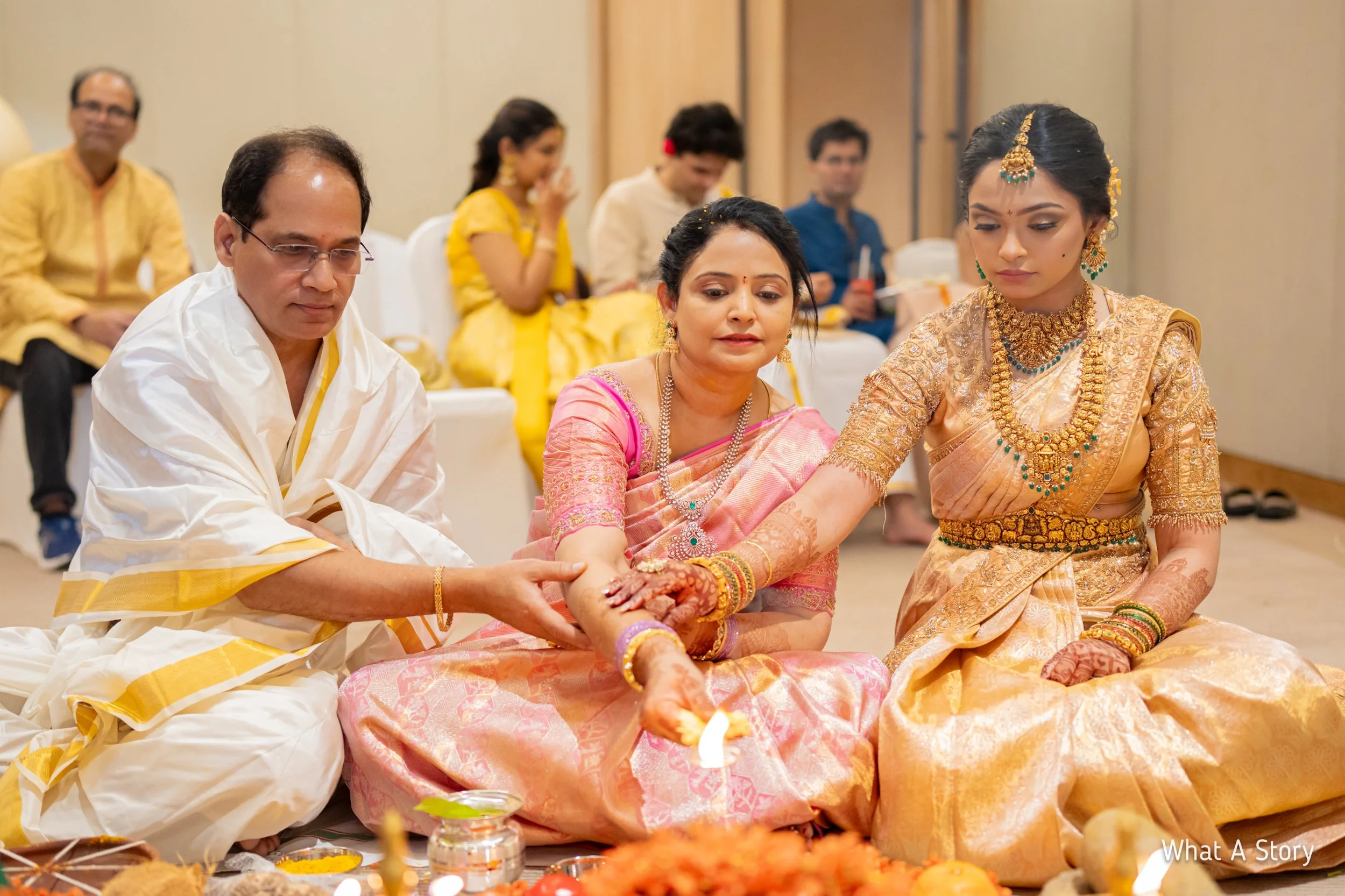
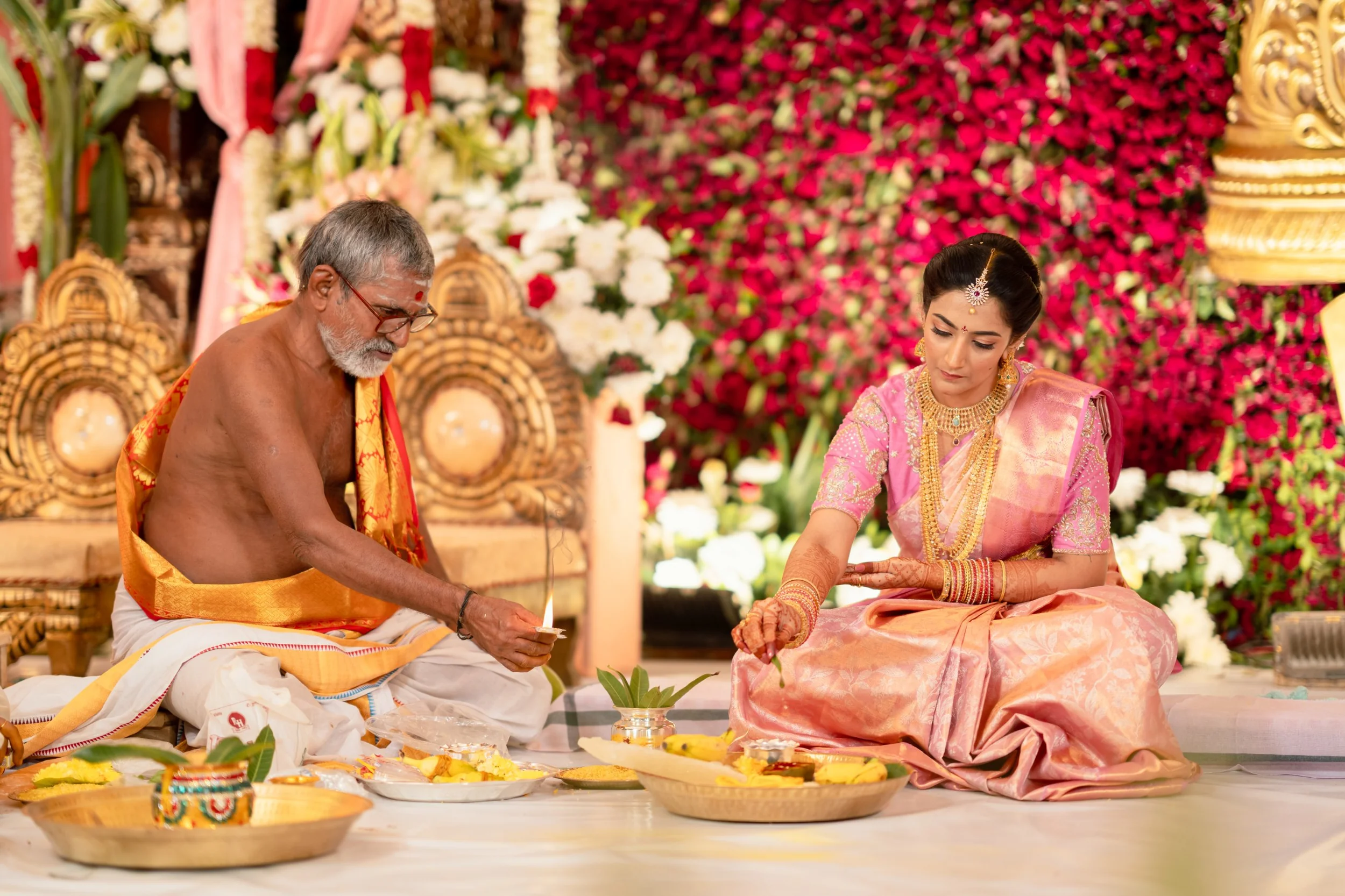
The Gauri puja is performed by the bride to seel the blessings of the Goddess Gauri, a form of Parvati associated with marital well-being. In Hindu tradition, Parvati’s marriage to Shiva is an important divine wedding story, often remembered as an image of devotion and equal partnership. This is followed by a Ganesh Puja, invoking Lord Ganesha, widely worshipped at the beginning of important undertakings for blessings and the removal of obstacles.
All of them are rituals that offer a beautiful contrast between celebration and devotion. Our documentation is meant to remind you of the promises of the day and the blessings you carry now and forevermore.
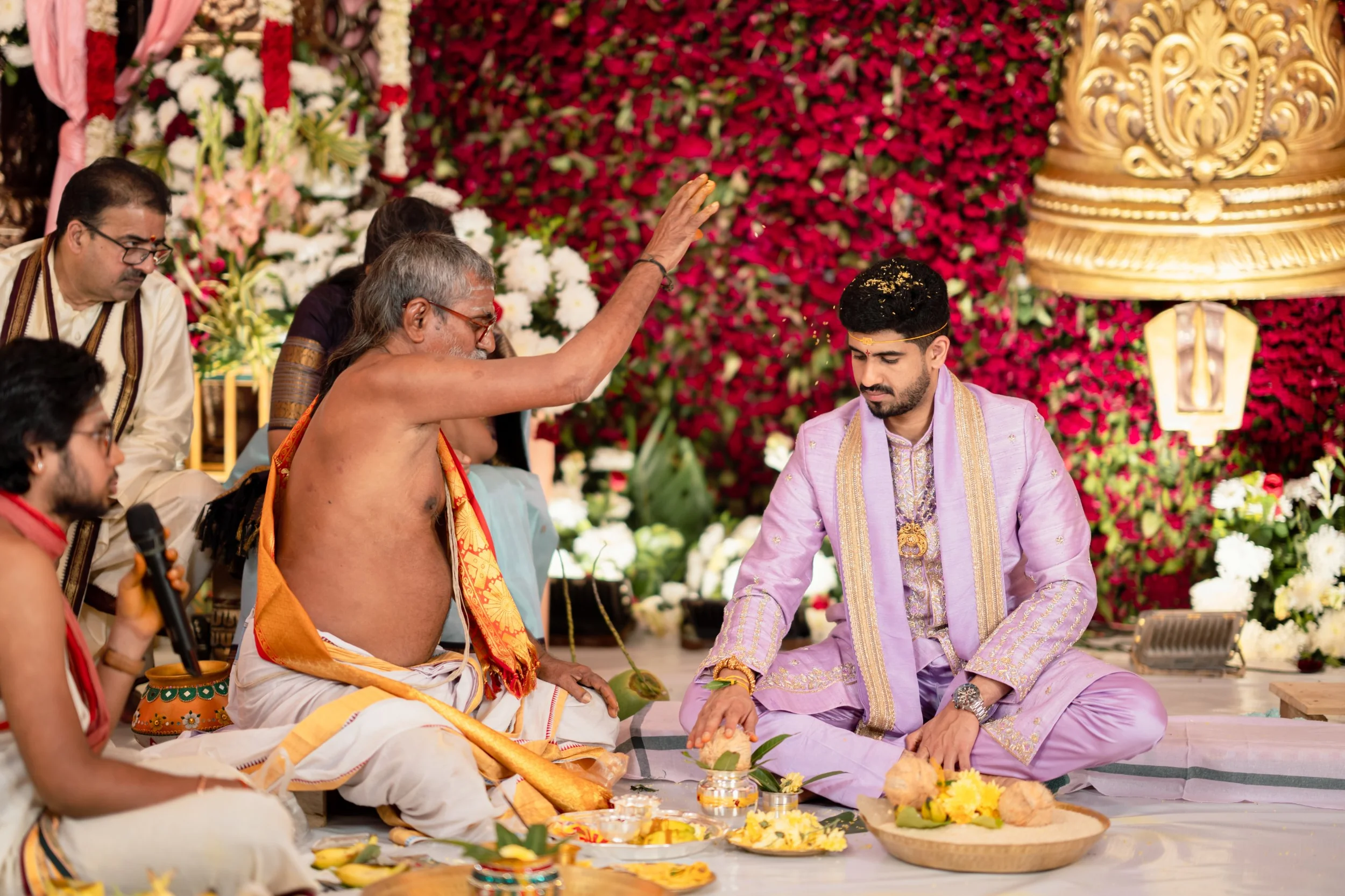
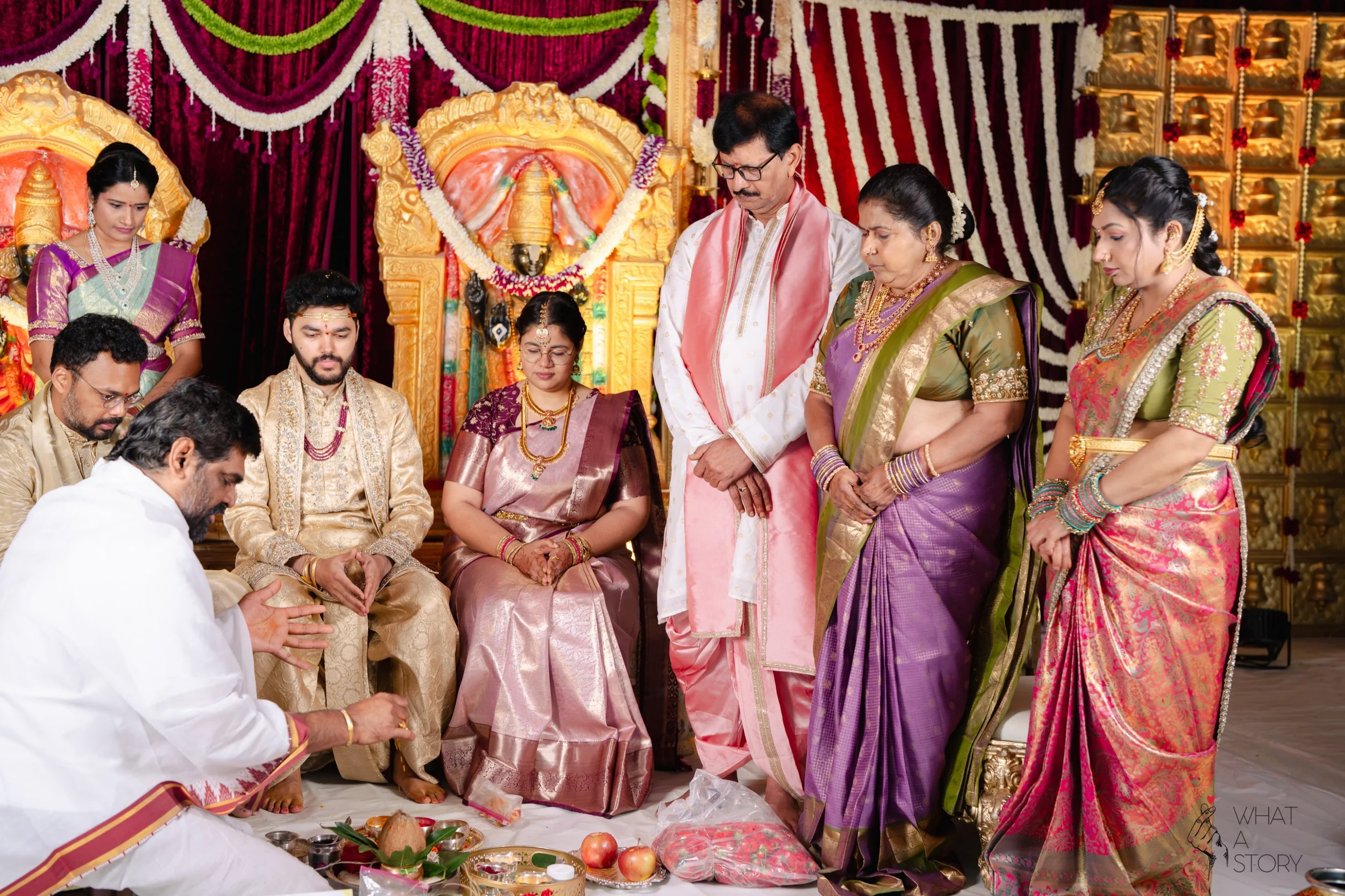
We know what is coming and roughly when. Which means the camera is already where it needs to be when the addutera comes down, rather than moving while it happens.
The Main Ceremony: Binding Rituals
This is the heart of it, the sequence that makes a marriage a marriage. Under the mandap, with the sacred fire as witness and the priest guiding every mantra, the rituals move from the giving of the bride to the seven steps that bind two lives together. They follow one another closely, sometimes within minutes of each other, and each one carries a moment that will not come again.
Kanyadaanam: A Family’s Blessing
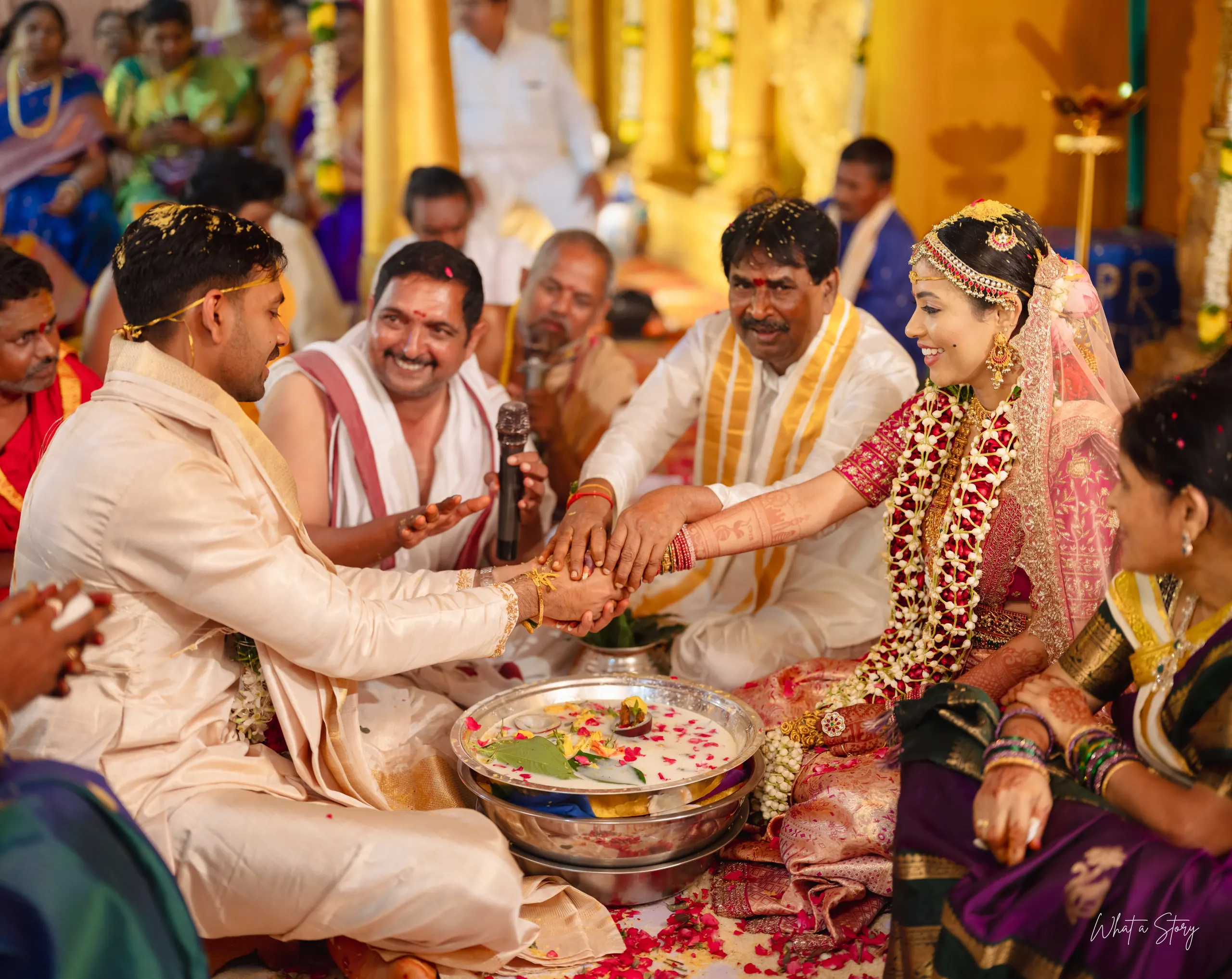
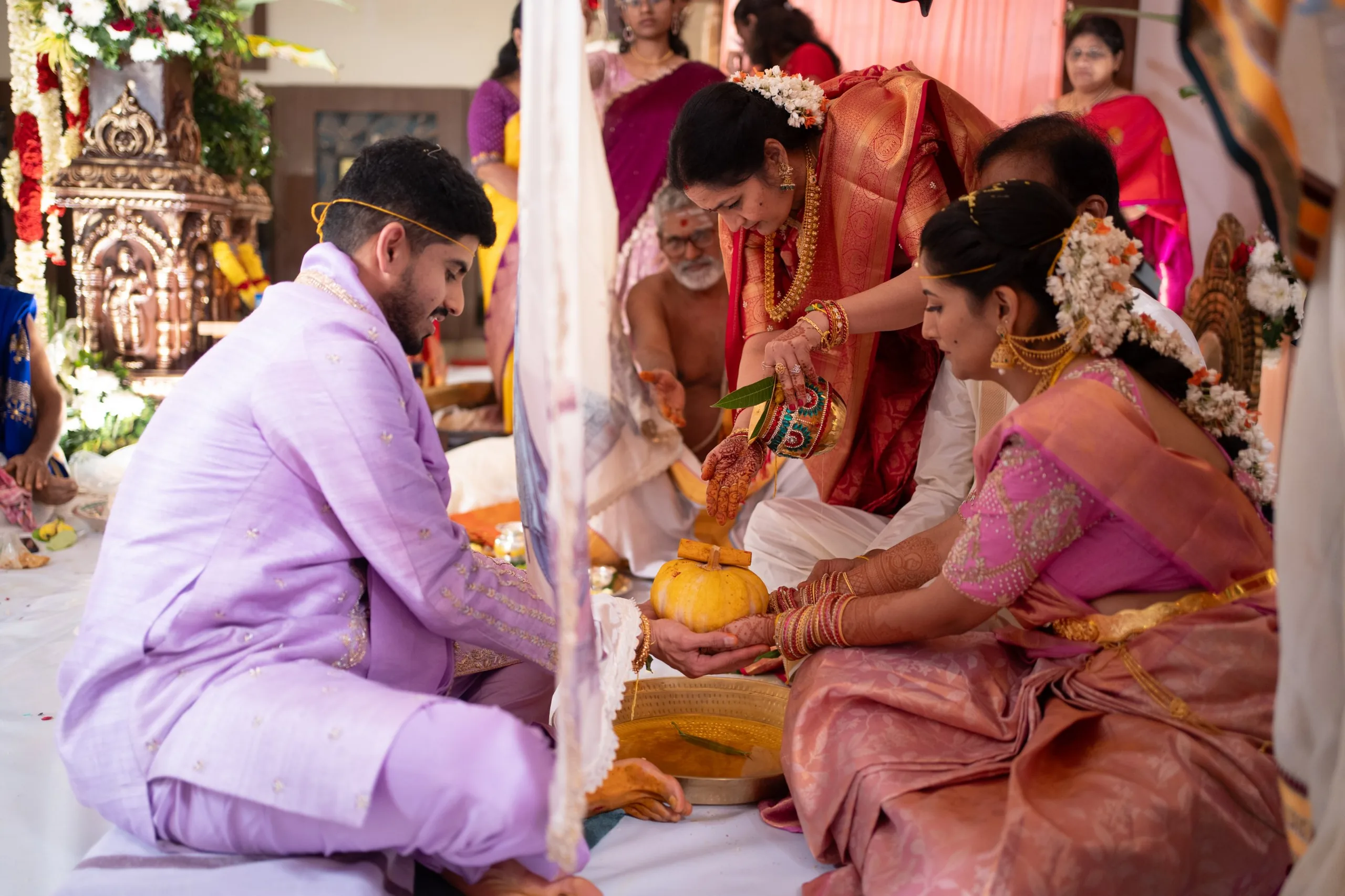
One of the most emotionally significant moments of a traditional Telugu wedding, the bride’s parents participate in a sacred ceremony in which they entrust their daughter’s hand in marriage to the groom, hands trembling. The priest guides the couple and their parents through the prescribed mantras and offerings.
The word “kanyadaanam” is interpreted as giving or entrusting a daughter. The father of the bride asks the groom to promise to care for his child’s happiness and to support the bride in her Dharma (duty), Artha (prosperity), and Kama (love). The groom’s acceptance of every condition means agreeing to care for his partner for the rest of their lives together.
Jeelakarra Bellam: Together Through Everything
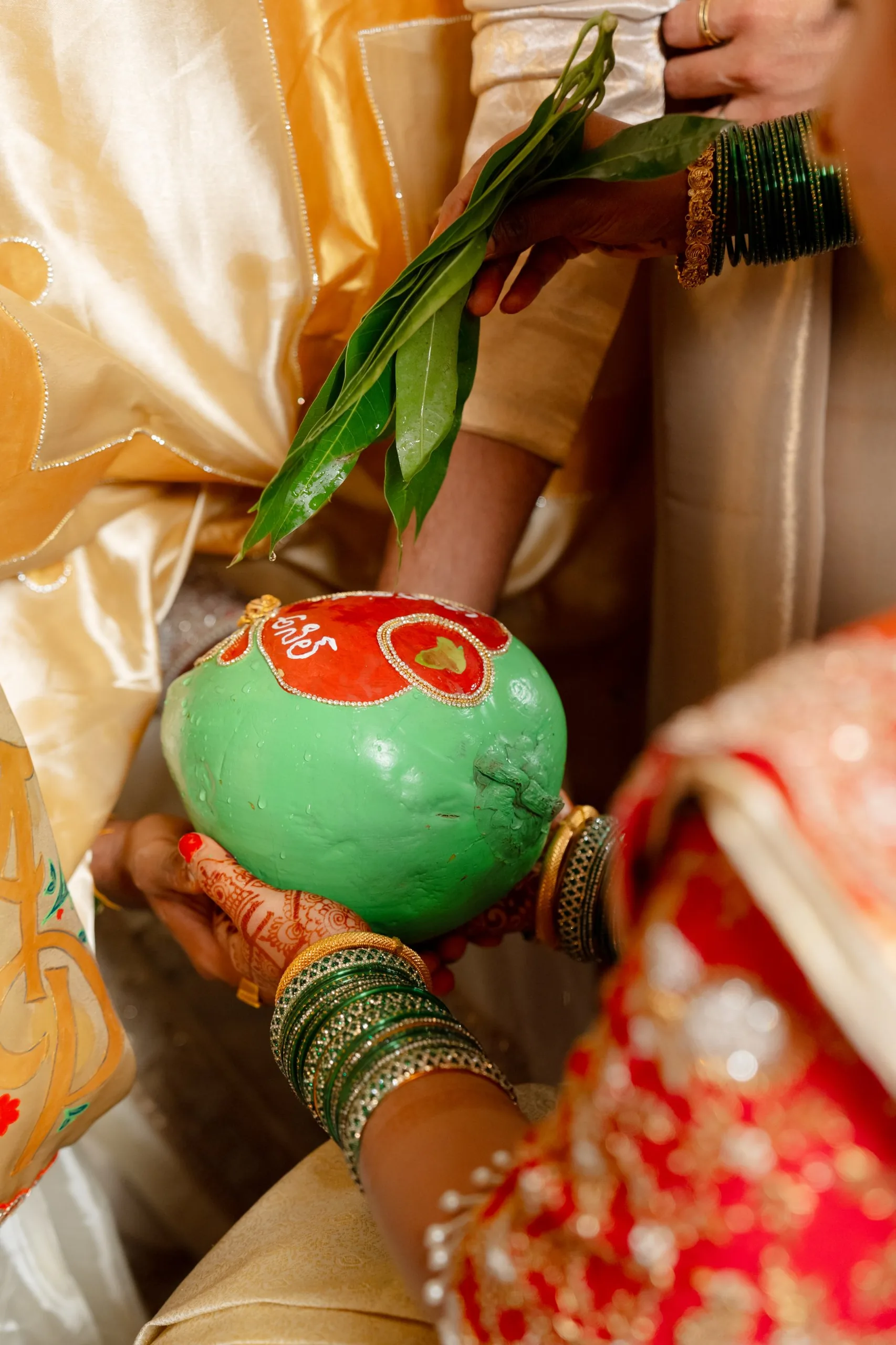
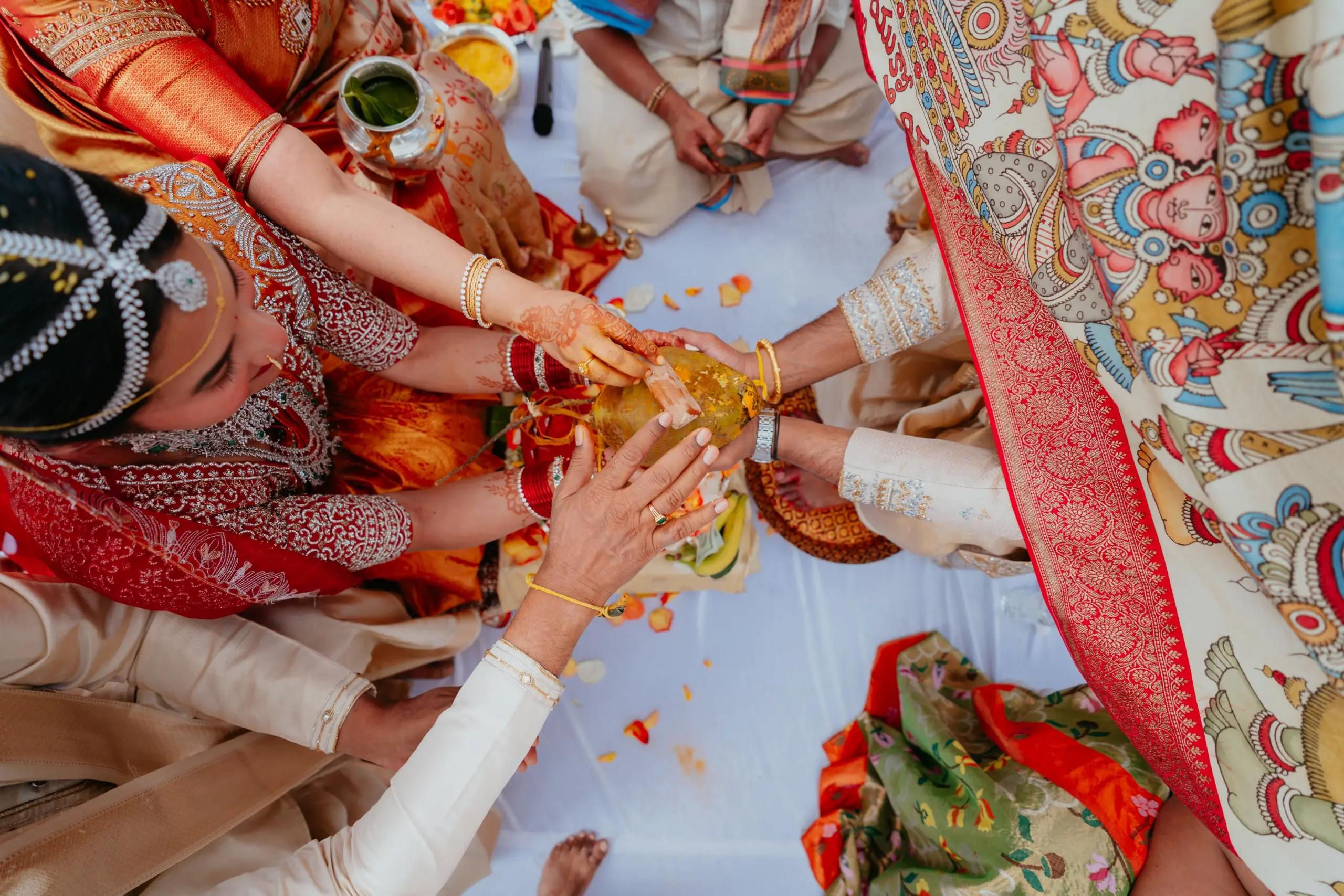
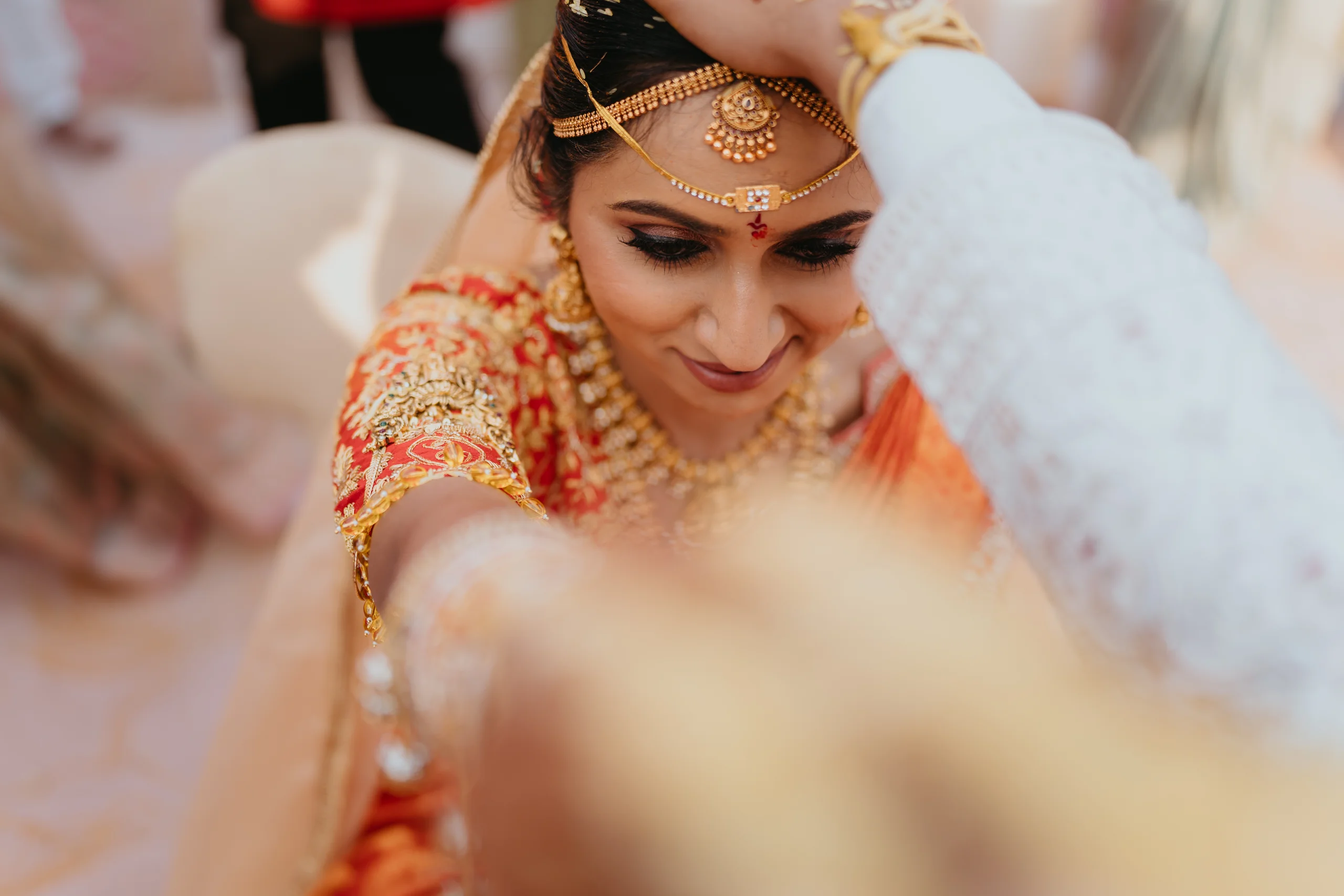
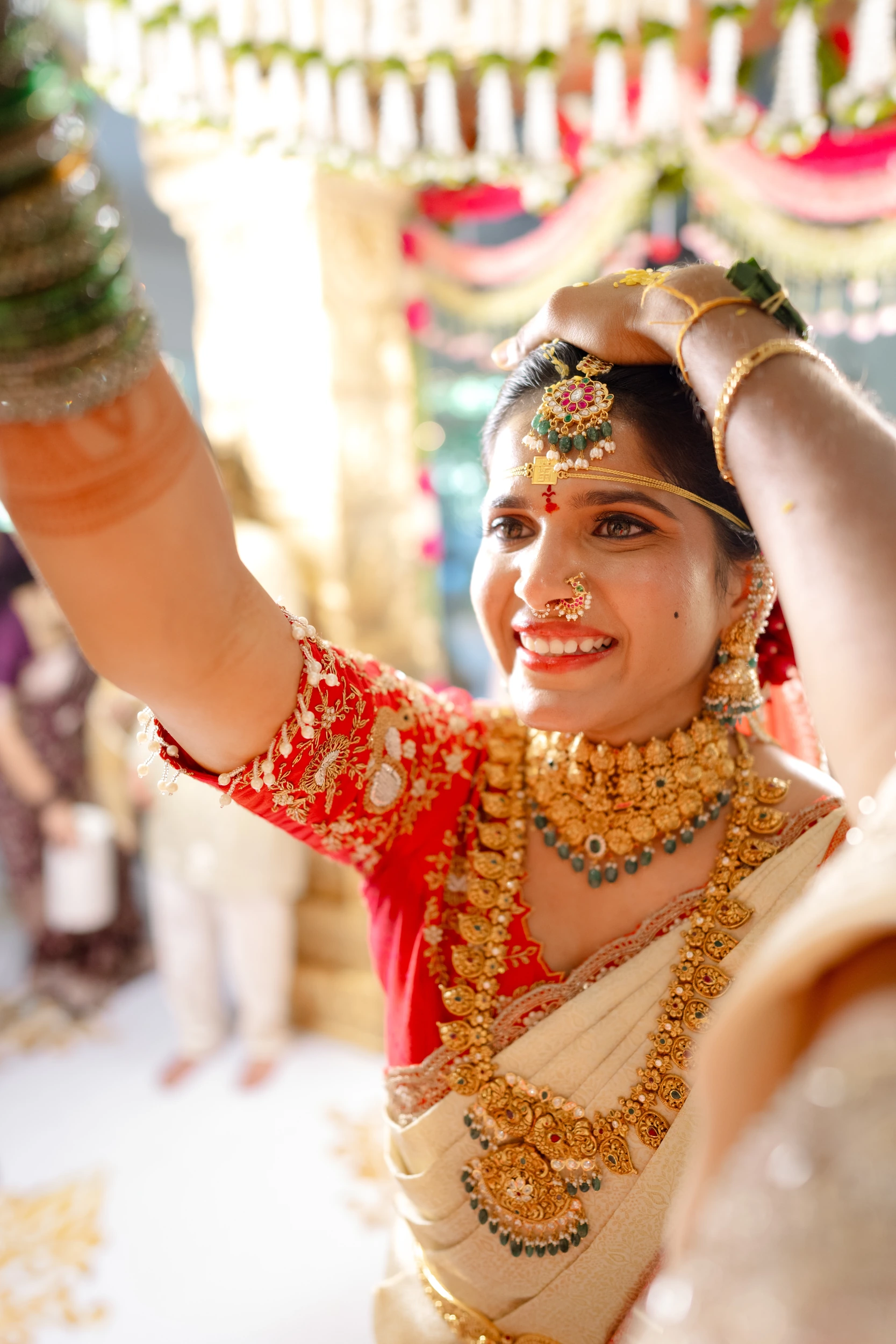
The Jeelakarra Bellam is one of the defining rituals of a Telugu wedding. At the auspicious muhurtham that was decided during the Nischayatartham, separated by a traditional cloth screen, the addutera, the bride and groom place a mixture of jeelakarra(cumin) and bellam(jaggery) on each other’s heads. The couple is only meant to look at each other first on the day of the wedding after the placing of the mixture, and the addutera is removed.
The ingredients that carry this ceremony offer a symbolic interpretation of a marriage: cumin’s sharp and earthy taste and jaggery’s sweetness represent the different experiences of life. Together, they evoke the hope that the couple will remain united through every circumstance. A tradition best explained through its established ritual symbolism, it is a moment of the greatest devotion and acceptance for the bride and groom. From placing unseeing trust in the other through the screen and to finally getting to look at the eyes of your partner, the ceremony is full of hope, yearning, anticipation, and the definiteness of a new life having started the moment you look into each other’s eyes.
Mangalsutra Dharanam: Marriage, Symbolized
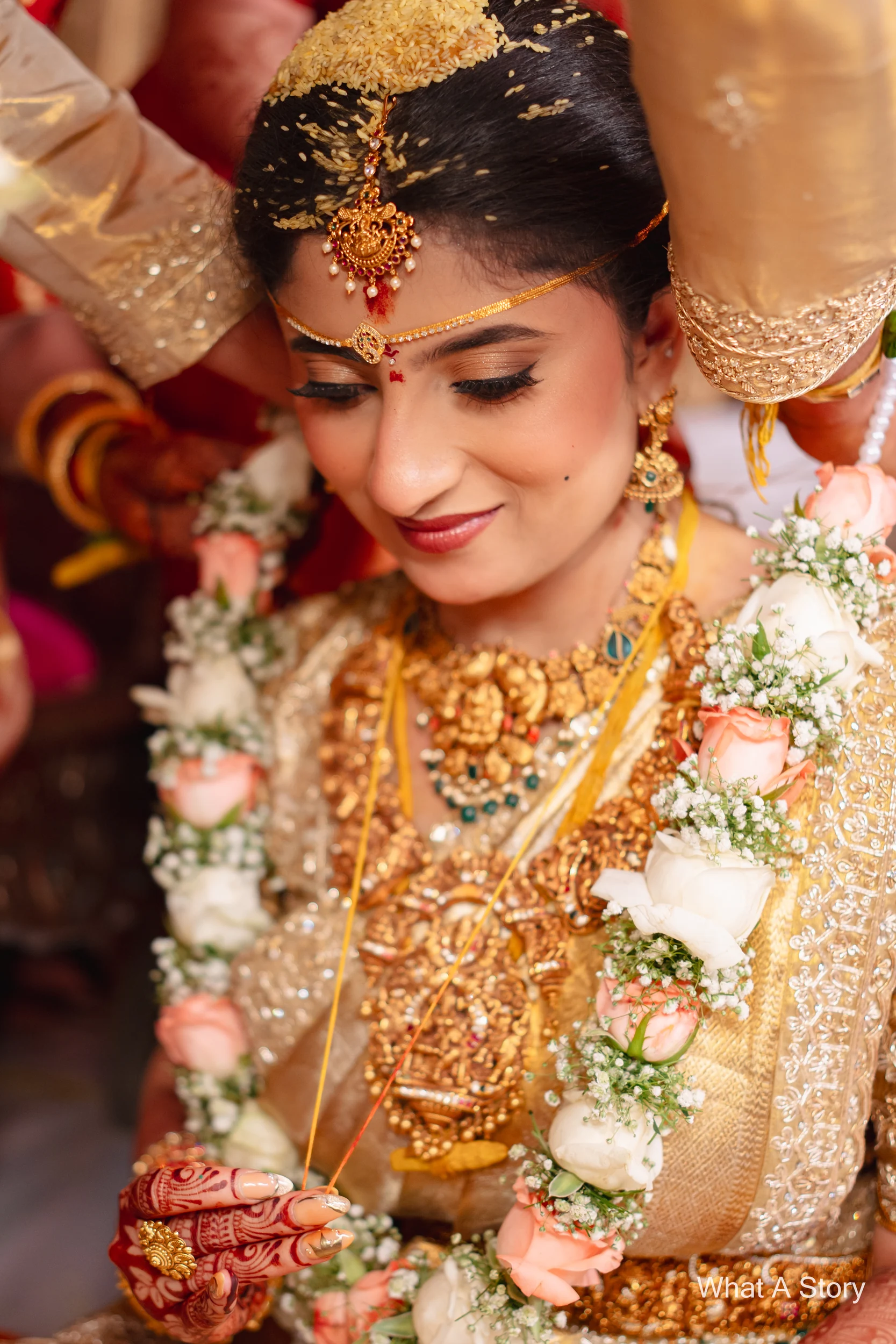
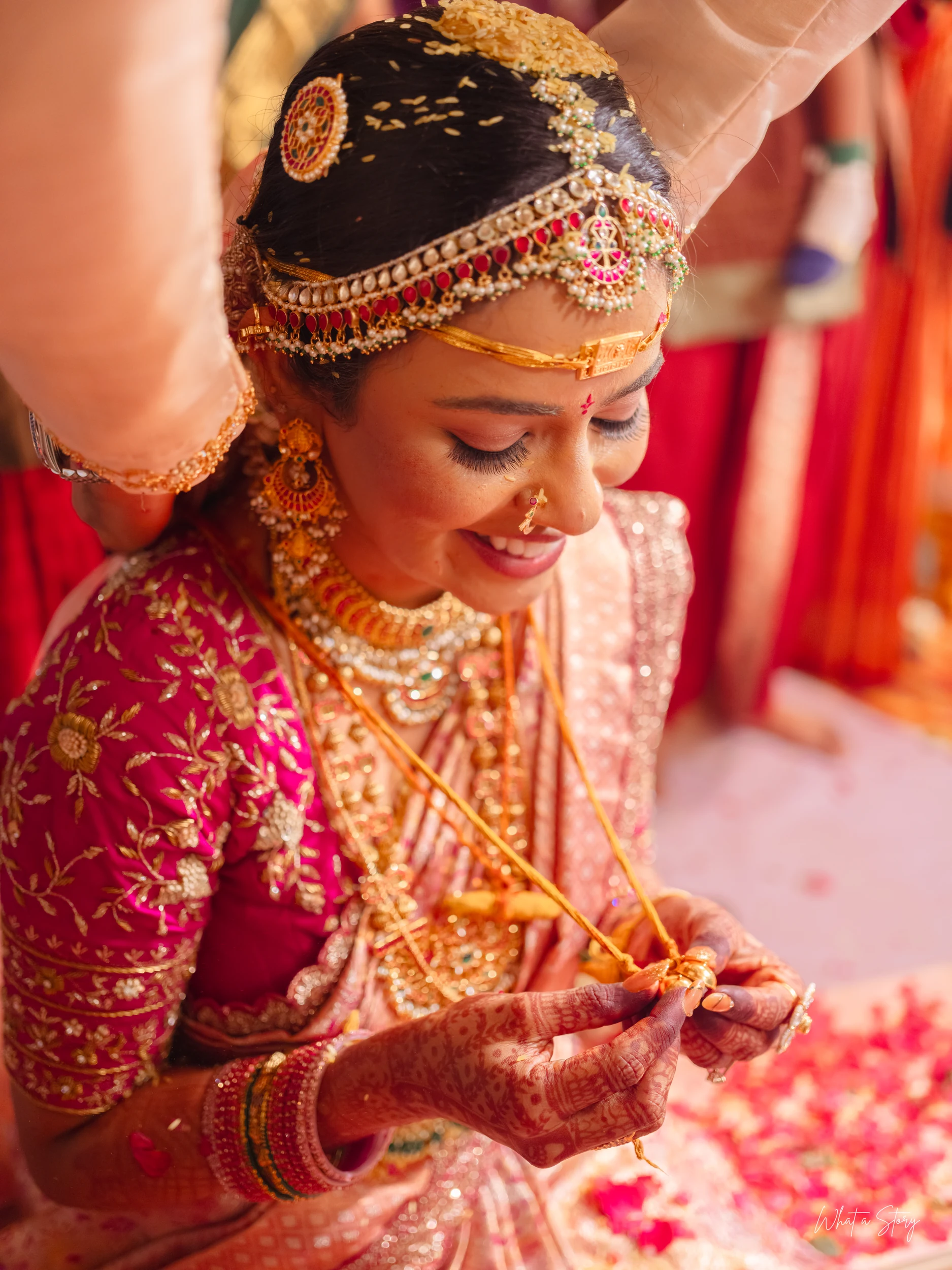
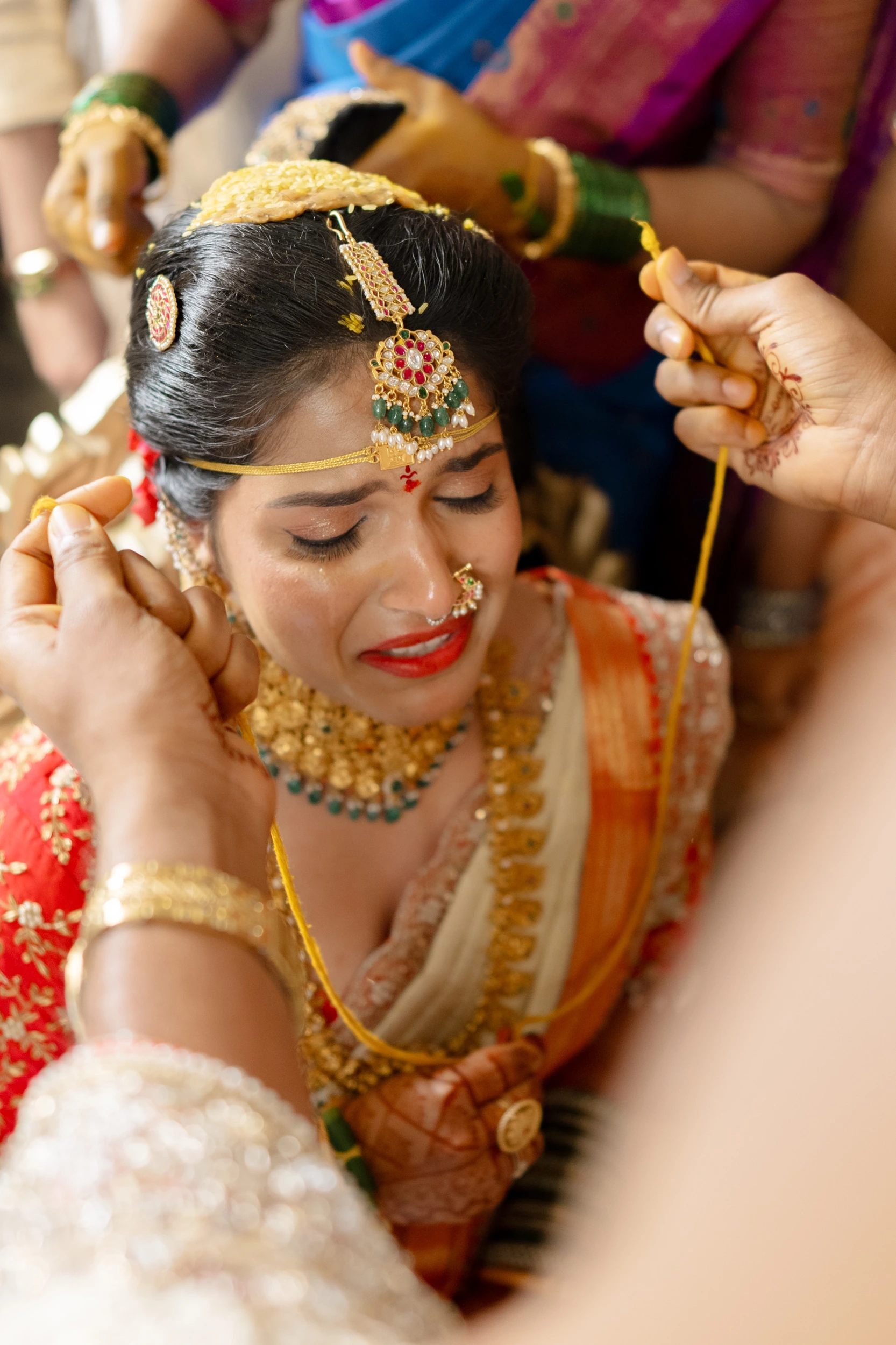
The Mangalsutra Dharanam, also sometimes known as Mangalya Dharanam, the groom ties the holy mangalsutra around the bride’s neck. Traditionally, the mangalsutra in Telugu families is made from a stick of turmeric tied to a thread also soaked in turmeric. This thread is then tied around the bride’s neck, with three knots, each carrying thought and meaning behind it.
- The first knot, Manasa, pledges devotion and acceptance through thoughts or the mind.
- The second knot, Vaacha, pledges commitment through speech.
- The third and final knot that solidifies a marriage as complete, Karmana, pledges support through actions, deeds, and behavior.
- Each knot is a representation of life ahead, and each knot is a promise to uphold.
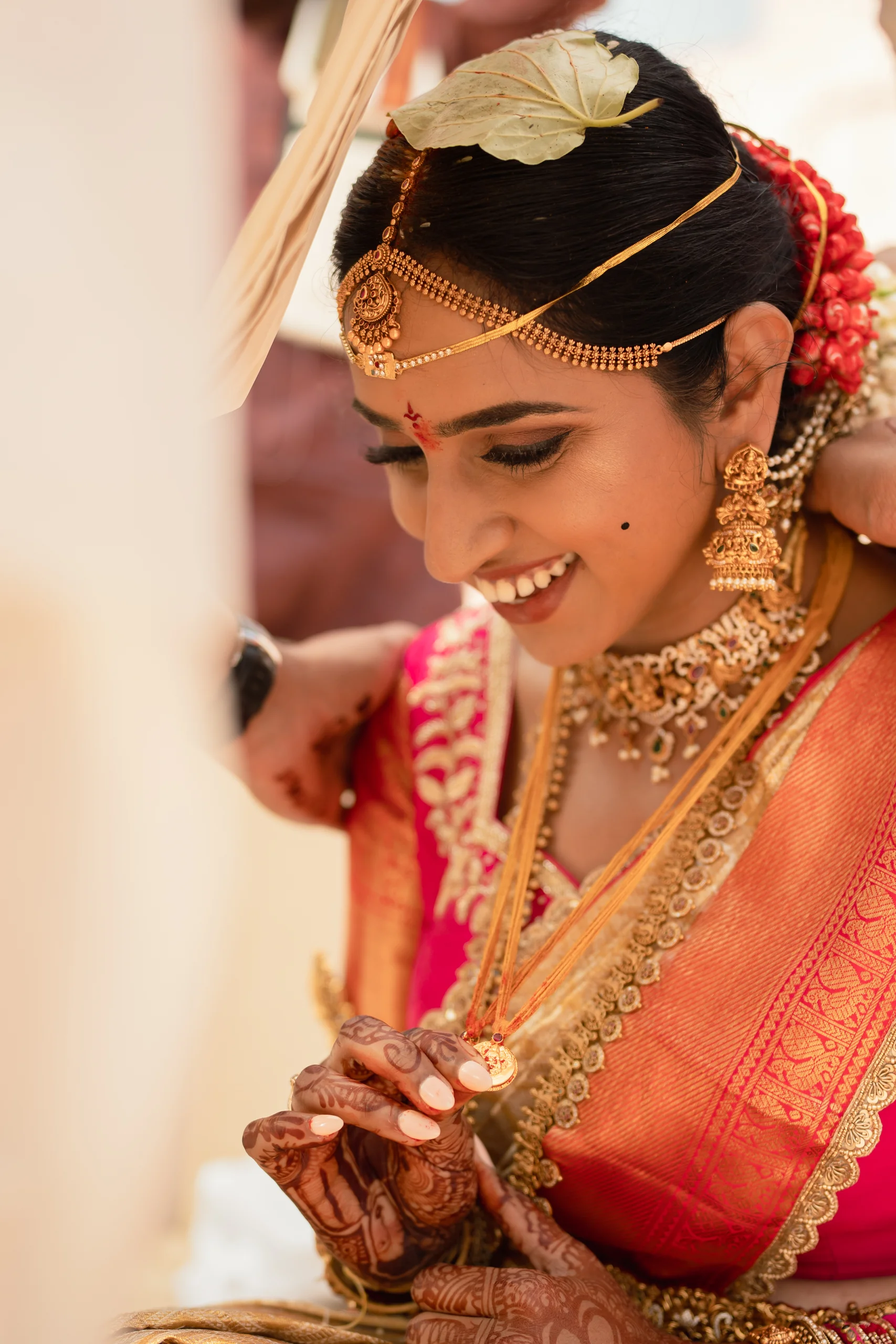
This is one of the most emotional parts of a wedding. The groom’s shaking hands, the bride trying to smile instead of cry, and family members showering blessings are all moments that, once captured, turn into moments of magic.
Every ritual on this page is one we have stood through. Tell us when yours is happening and we’ll come back with availability.
Talambralu: A Shower of Blessings
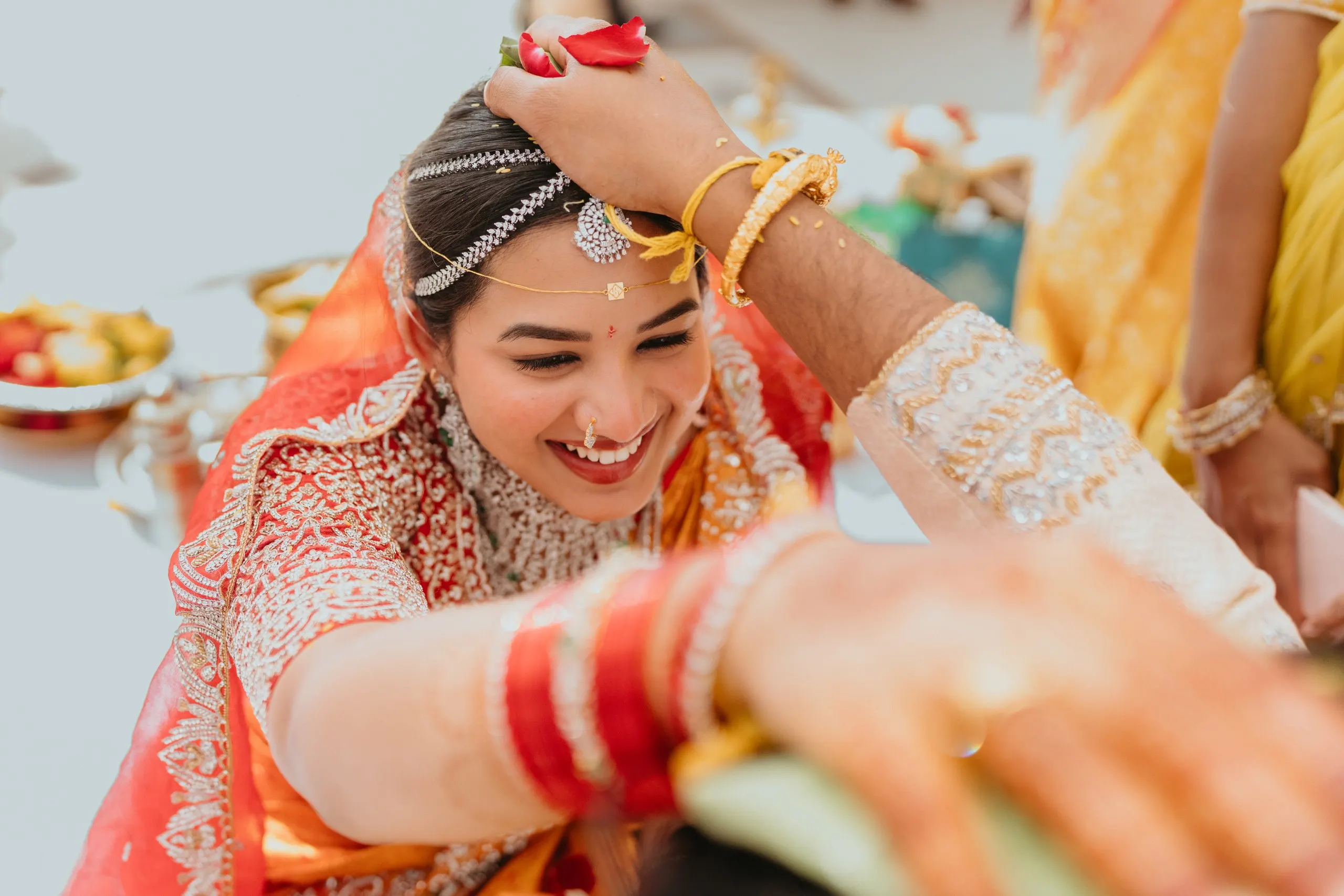
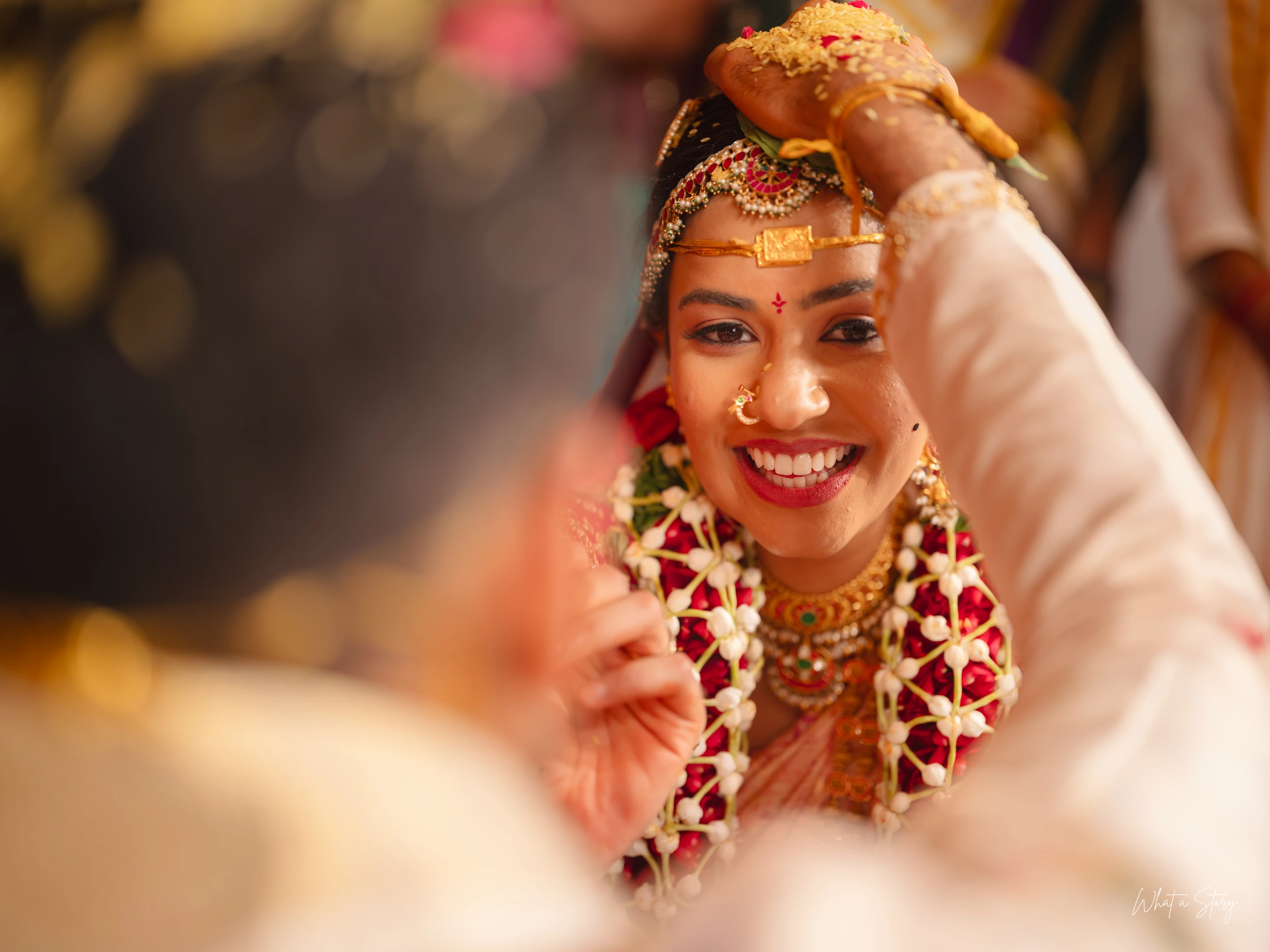
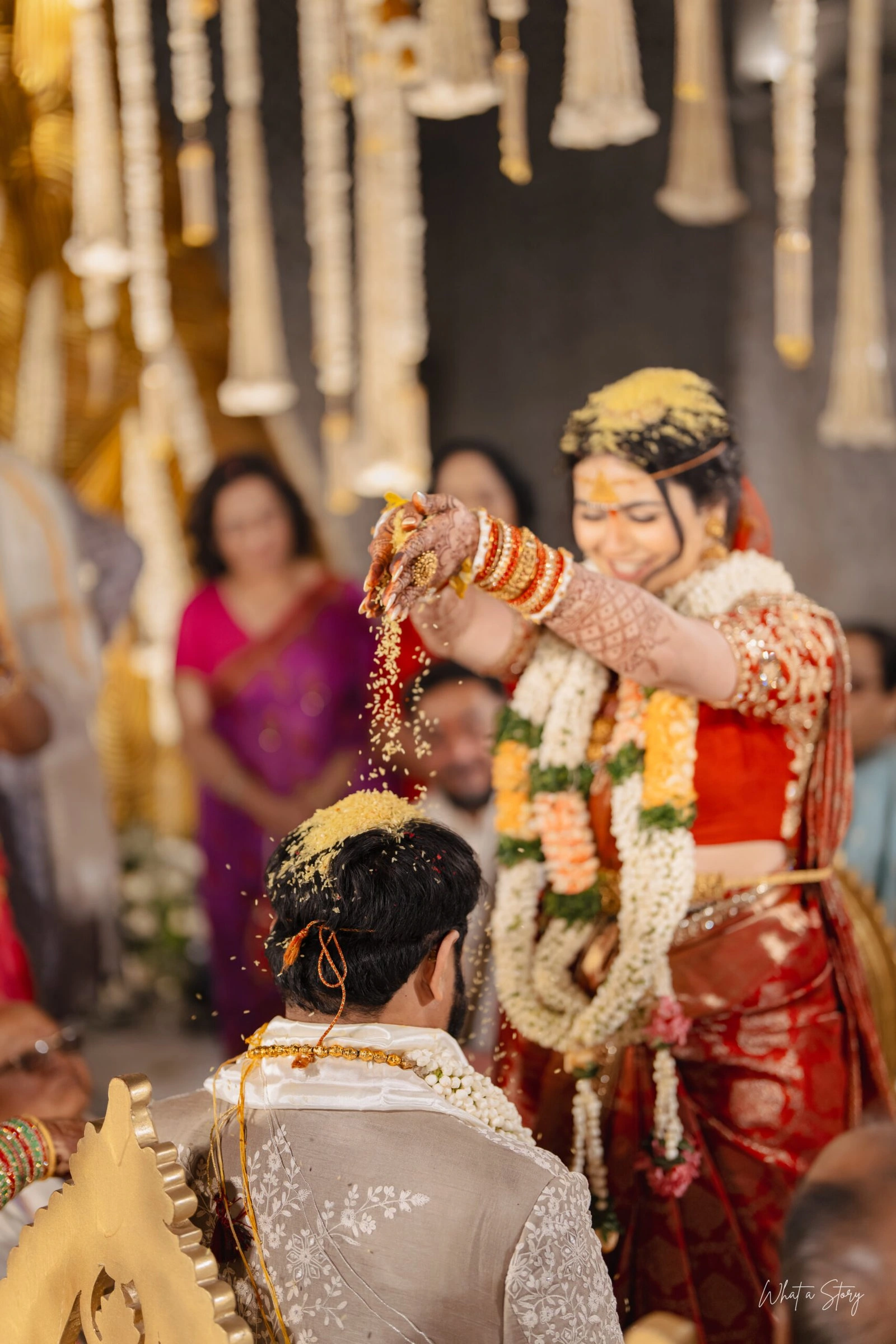
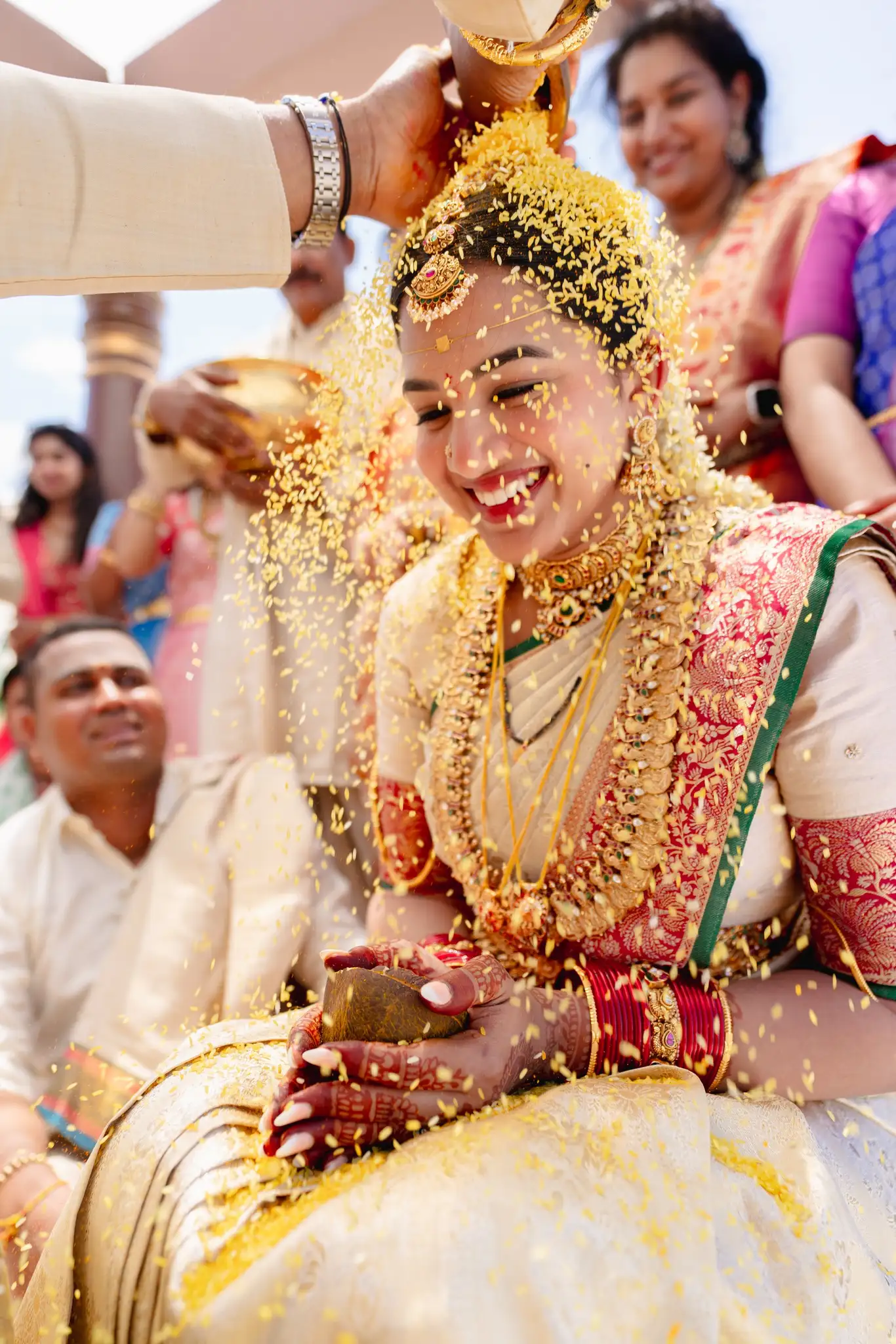
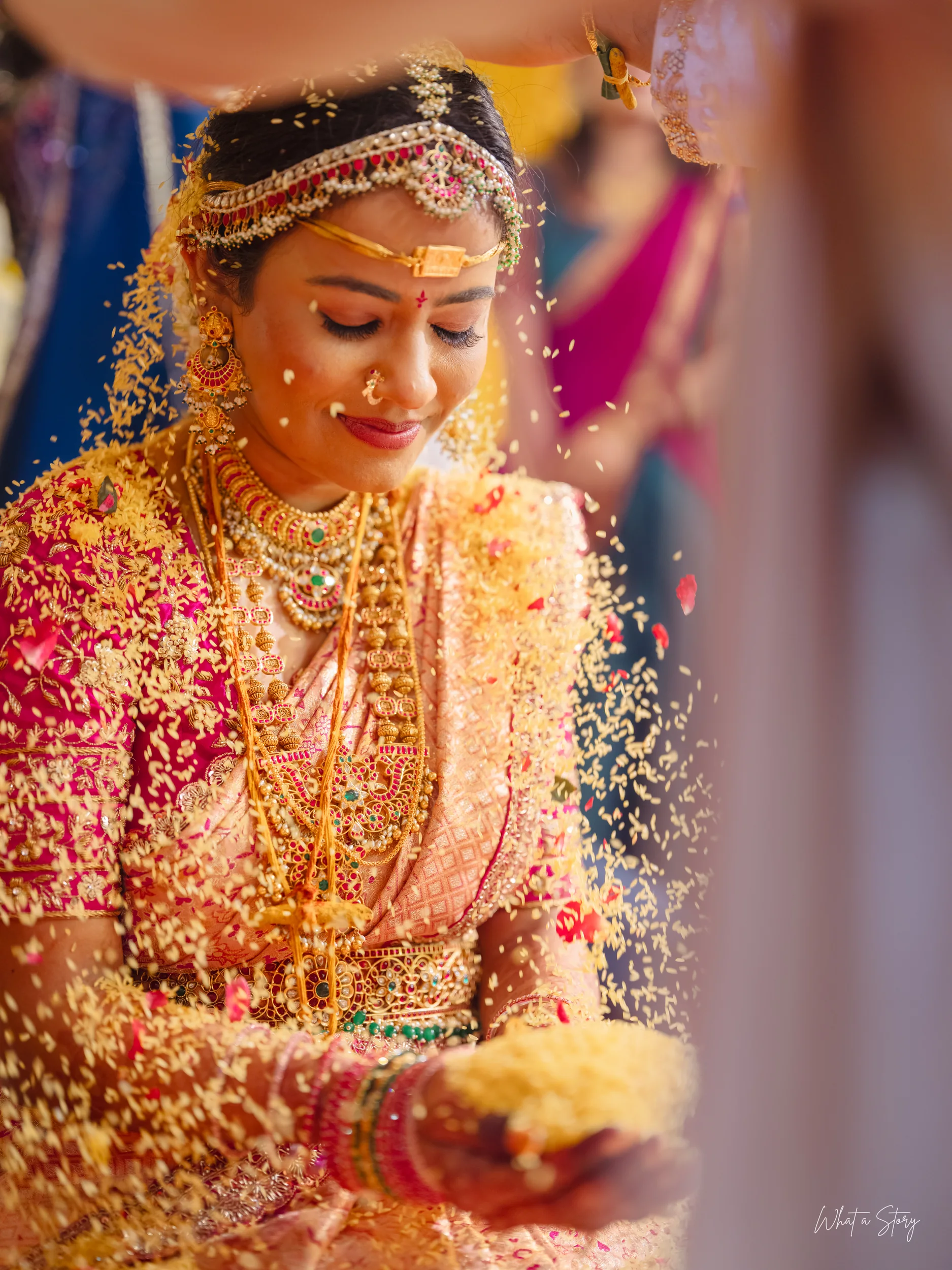
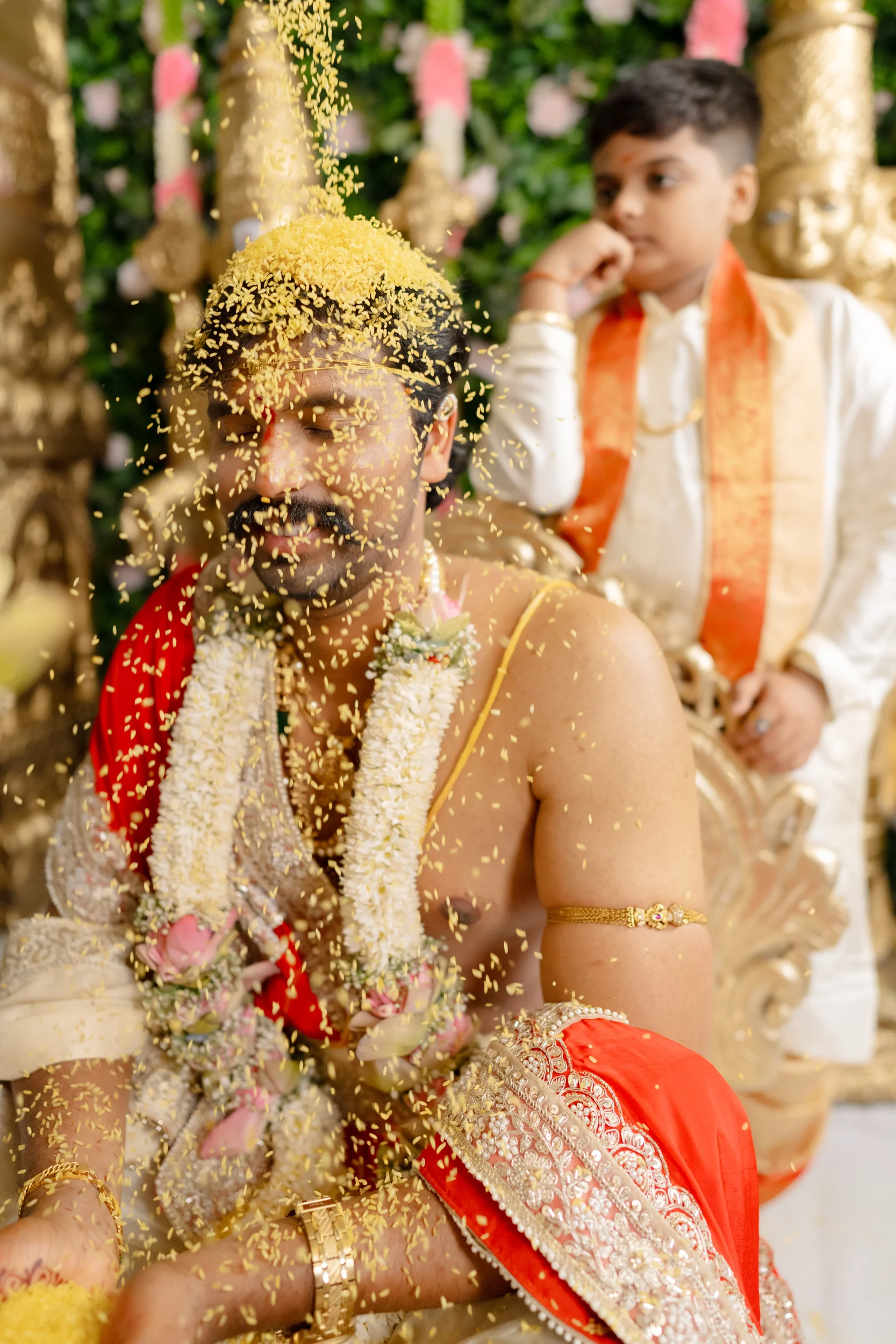
One of the most joyful moments of a Telugu wedding is the Talambralu. The couple showers each other with rice, mixed with turmeric and often accompanied by other additions like pearls and flowers according to family custom. Rice, associated with nourishment, fertility, and prosperity in many Indian cultures. In this ceremony, the playful exchange becomes a wish for abundance and happiness in married life.
It is a dream shot for the perfect picture, with the couple taking turns pouring rice over each other’s heads; the ritual often transforms into a friendly contest, ending in a whole vessel of the akshintalu being emptied over someone’s head!
Saptapadi: Seven Steps Towards a Shared Life
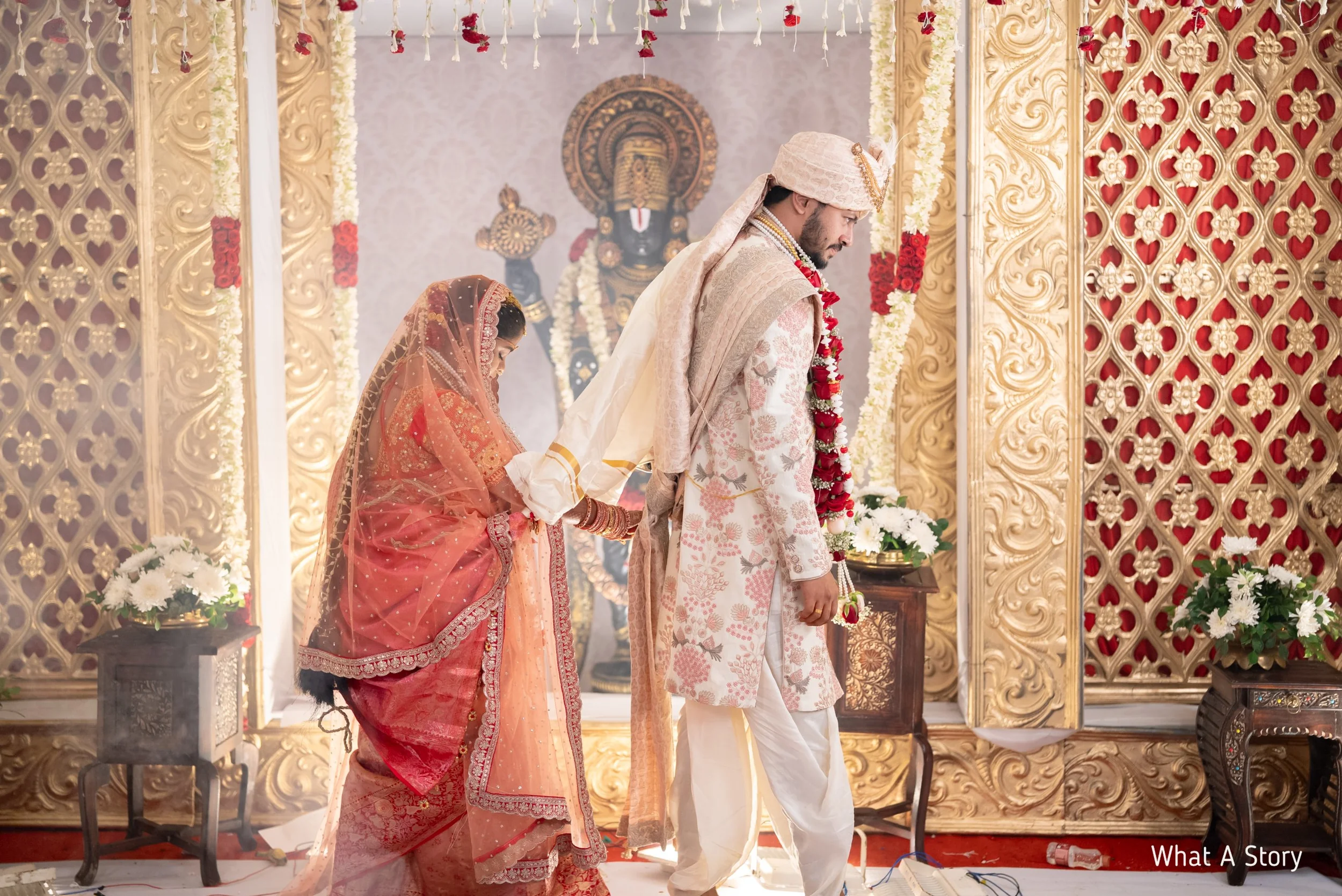
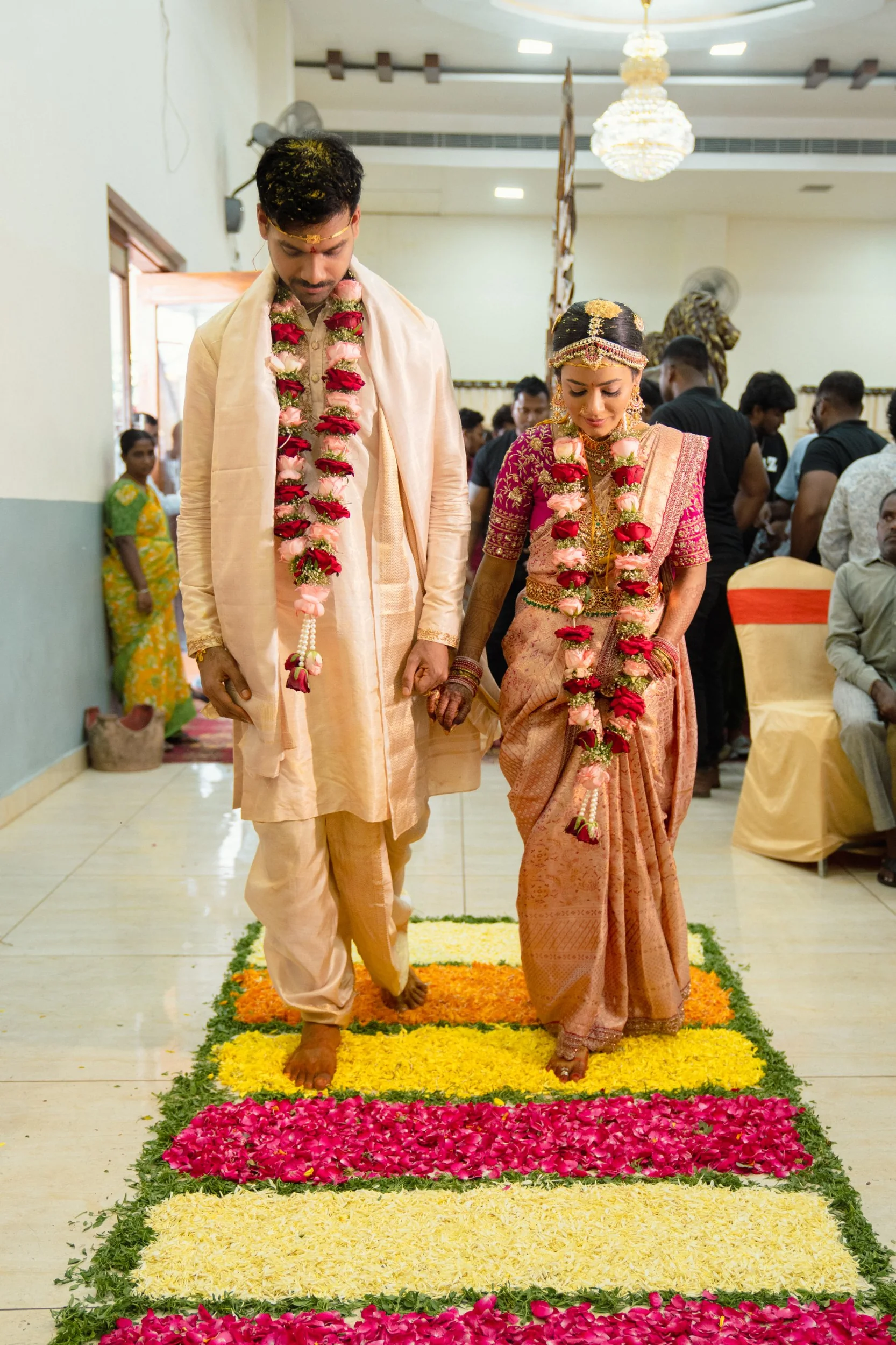
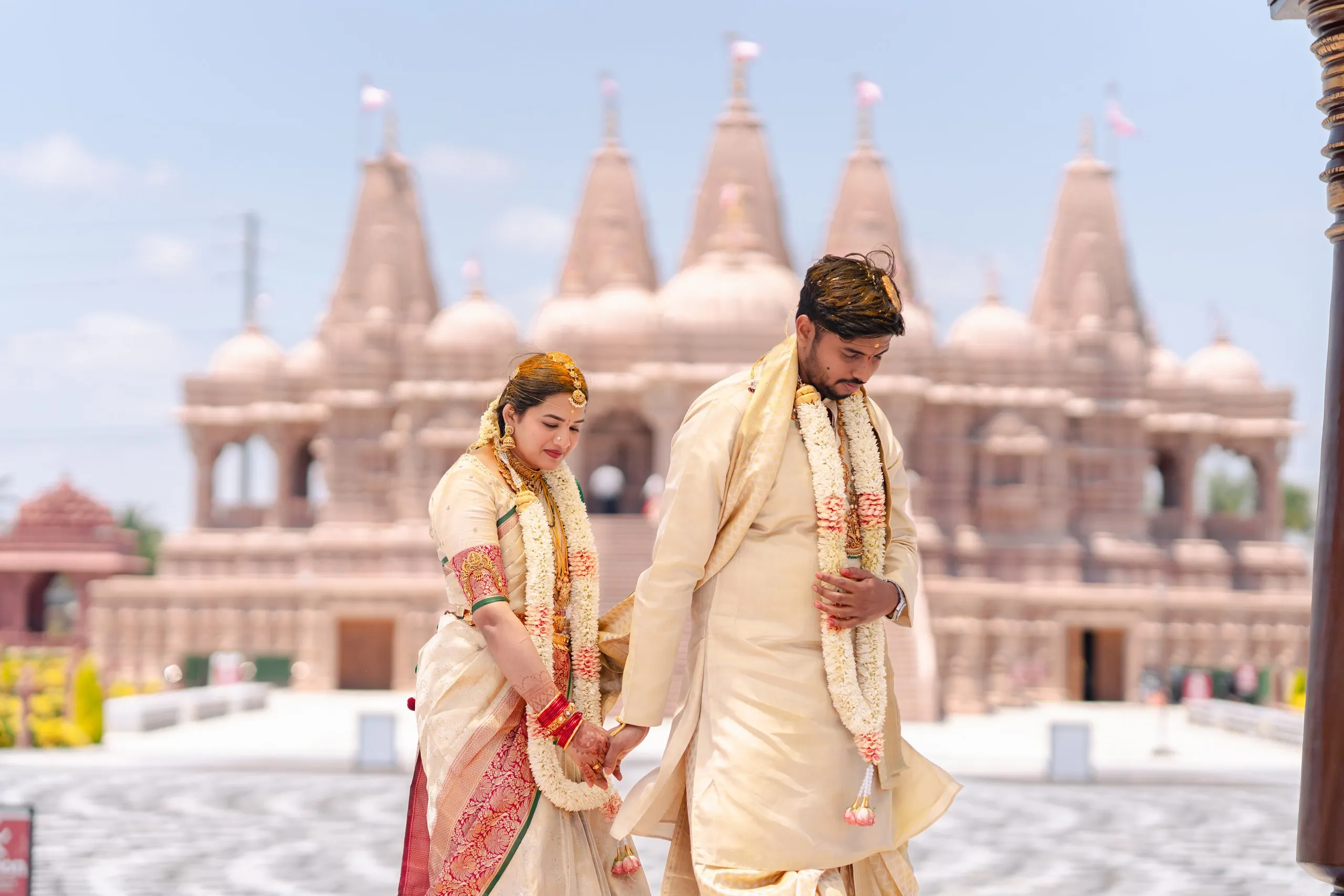
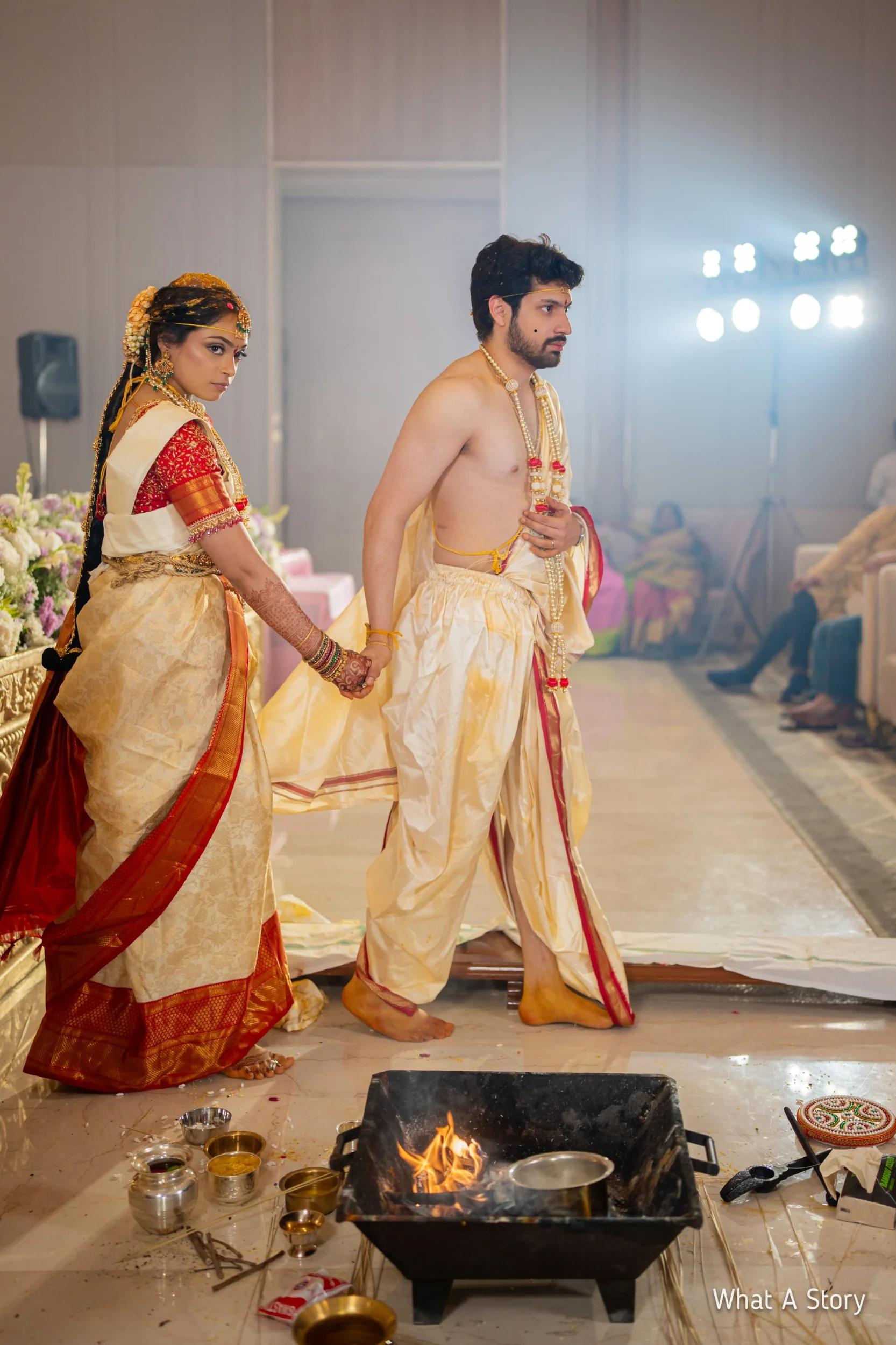
Saptapadi literally translates to “seven steps”. During the rituals, the couple takes these seven ritual steps together, as sacred hymns are recited by the priest. The vows are meant to invoke blessings associated with each step.
- The first step is associated with nourishment and provision, where the couple makes their first vow to keep each other happy and healthy and make sure sustenance is always provided for the other.
- The second step is associated with strength and vigour, in which the couple prays for mutual health, physical, mental, and emotional, and for the resilience to face life’s challenges.
- The third step is associated with prosperity and wealth, as the couple vows to work together to build a life of stability, financial prosperity, and wealth to thrive.
- The fourth step is associated with happiness and comfort, when the couple pledges to fill each other’s lives with joy and peace, trust and comfort, and a soulful promise to remain lifelong companions through thick and thin.
- The fifth step is a prayer to be blessed with a loving family and to care for those they love with all their hearts.
- The sixth step is a prayer for a life in harmony with the seasons and stages of life, alongside which they vow to fulfill their duties toward family, community, and society.
- The seventh step is especially significant. In many traditions, including the Telugu one, the seventh step signifies the couple’s promise of eternal friendship, loyalty, and spiritual unity, walking a shared path of mutual respect, love, and higher purpose.
Saptapadi represents spiritual, physical, emotional, and ritual commitment. The couple is taking a step forward into their new life, and with this, they are bound together, with the sacred fire as their witness, a quiet glow coming from within.
Arundhati Nakshatra Darshanam: Looking Up at The Stars
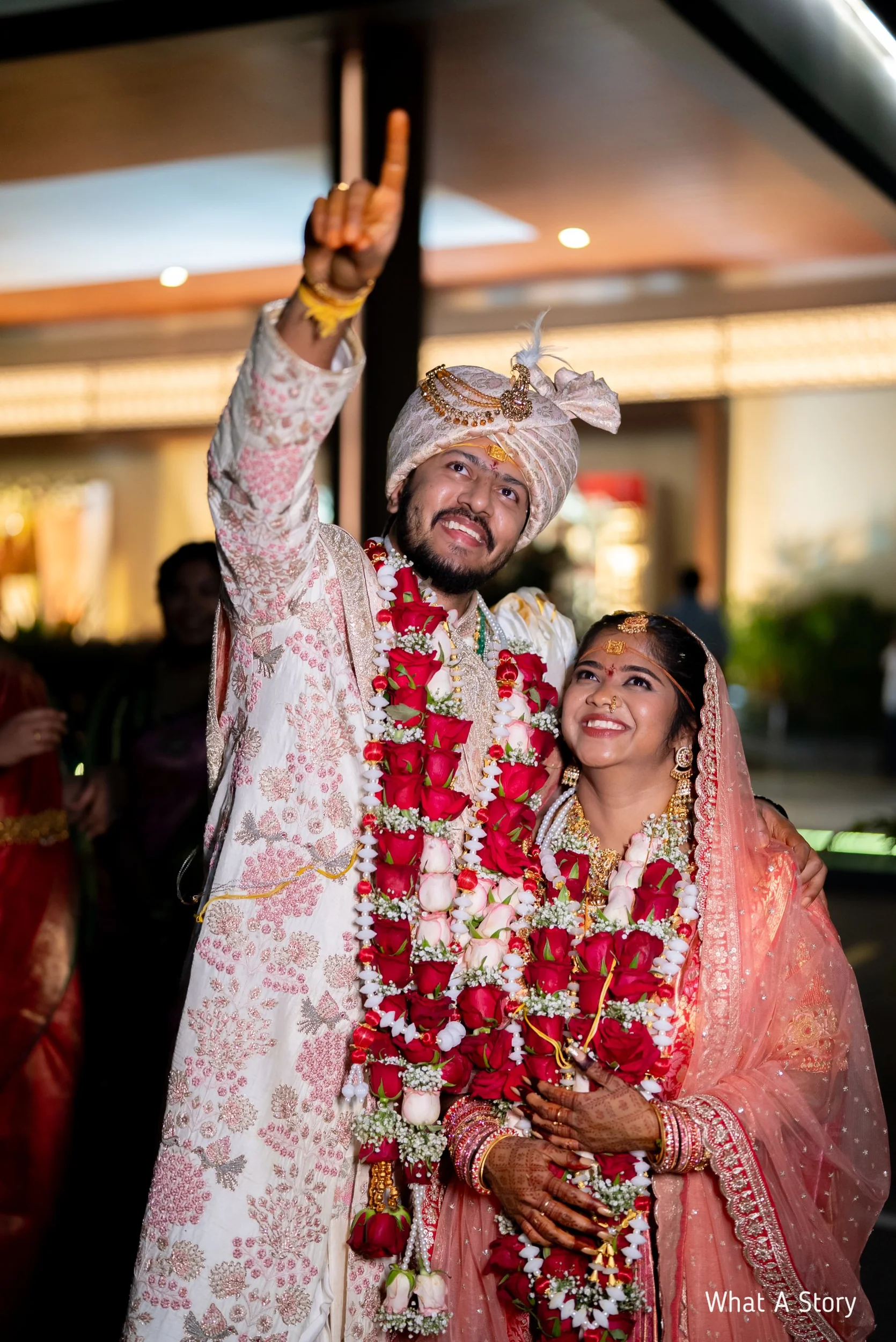
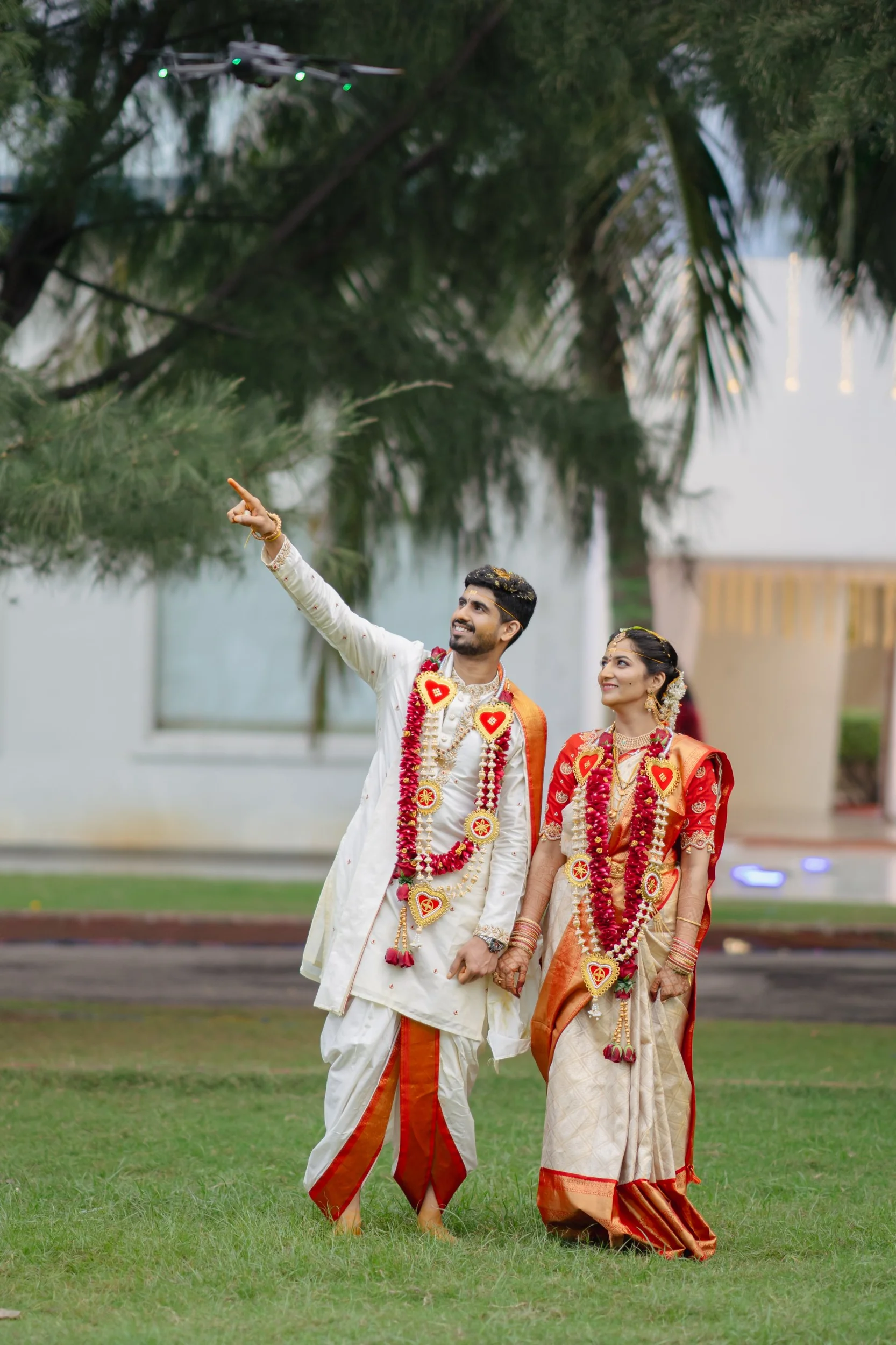
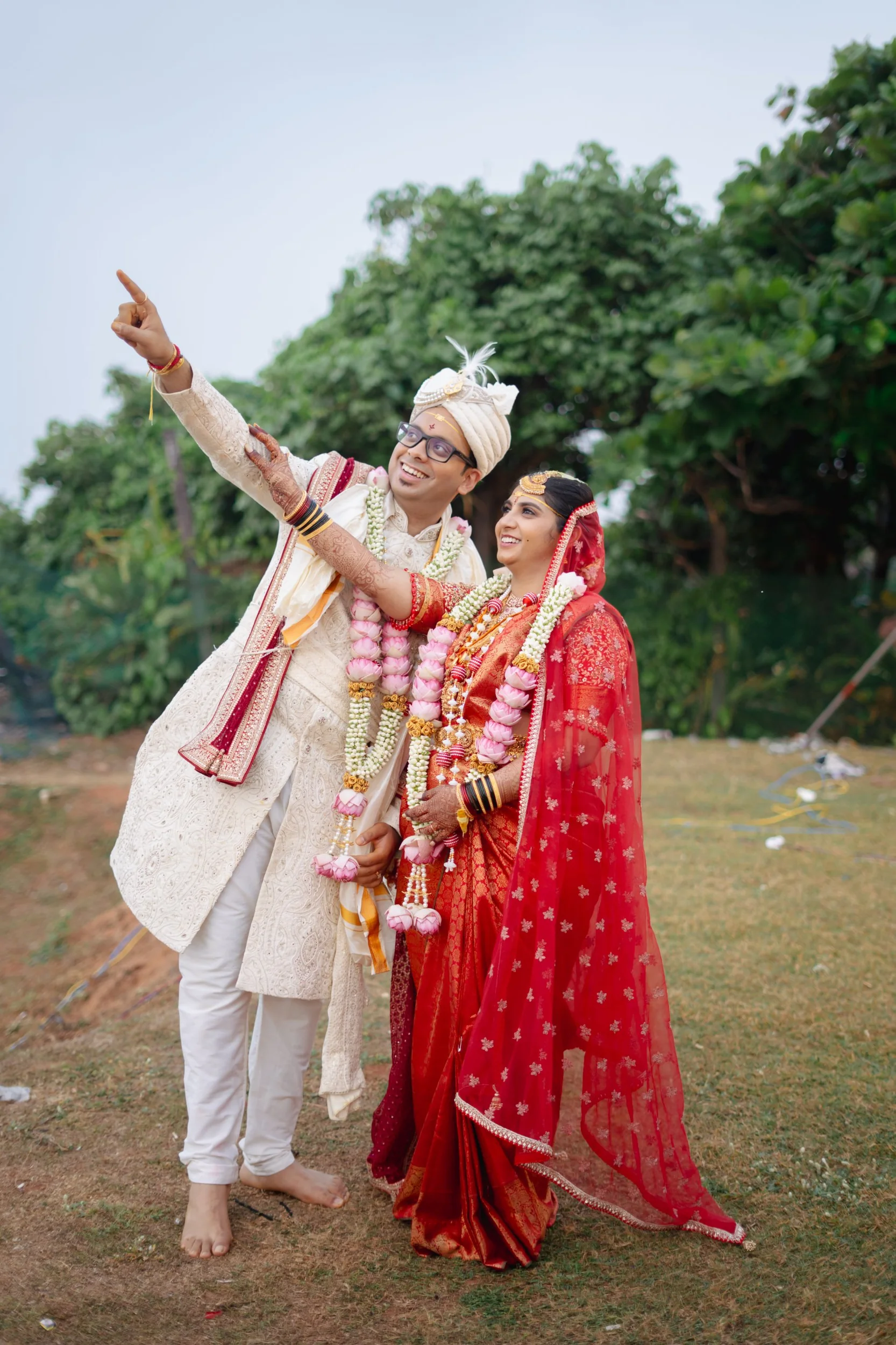
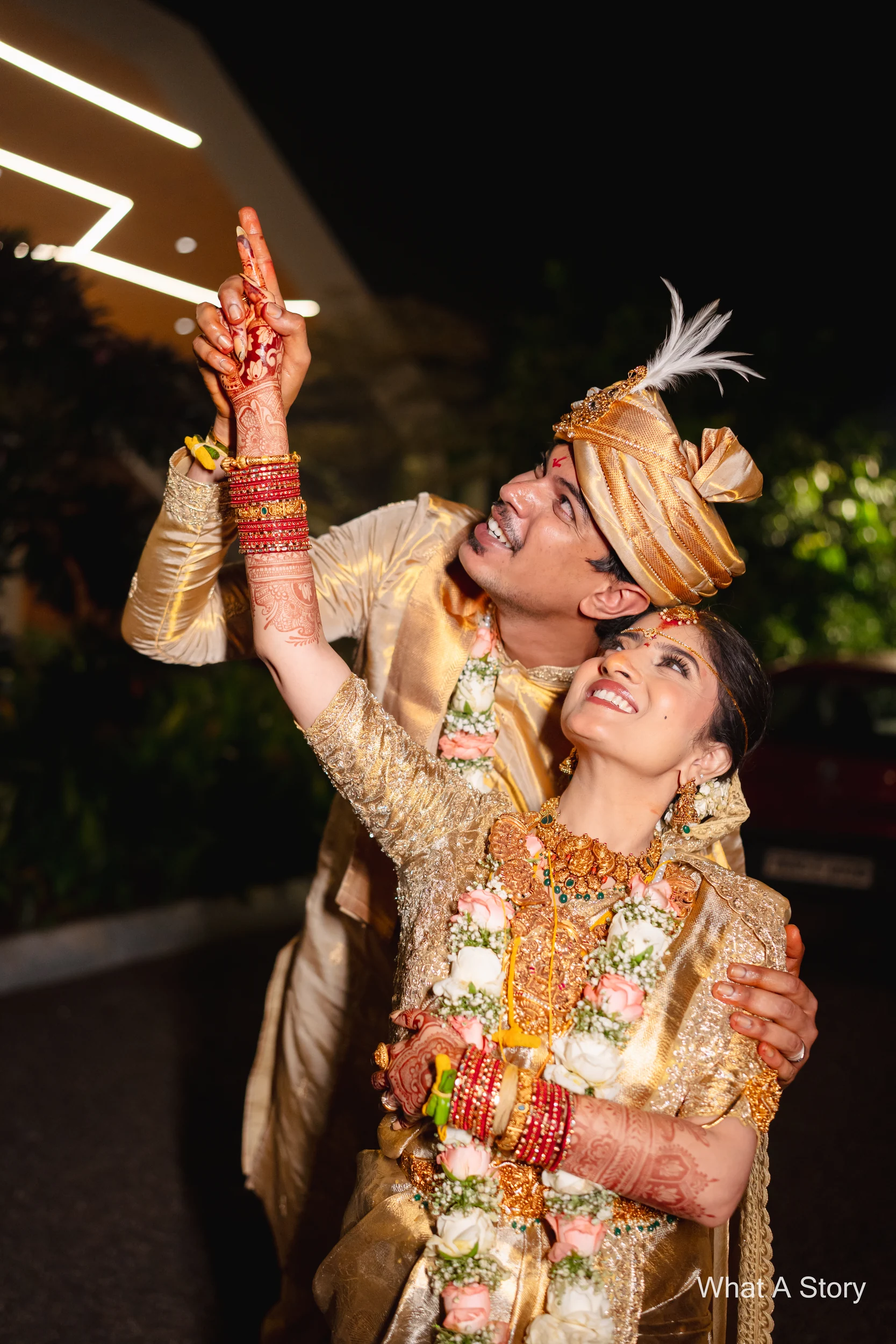
In stories and religious traditions, Arundhati, the wife of the sage Vashistha, is remembered for her steadfastness and devotion. The act of showing the newly married couple the Arundhati star is meant to evoke an understanding of the celestial pair as a symbol of enduring partnership. Capturing this moment is always full of laughter, as the star is remarkably difficult to find sometimes, and the wedding parties are filled with the joy of watching the couple find the star that starts their life.
Taking place after the main rituals of the wedding ceremony, viewing the star is understood to be an auspicious start to a marriage. Showing the couple this star marks the understanding that a marriage is not tied to obedience; a marriage is tied to companionship, and the act of being equals, mentally and spiritually.
Post-Wedding Rituals: Devoted Beginnings
When the vows are done and the guests begin to thin, a wedding turns towards leaving. These last ceremonies carry the weight of the whole week in them: one family letting go, another one welcoming, and a couple stepping into a home that is now theirs. They are the quietest rituals of the wedding, and often the ones families return to most in the photographs.
Appagintalu: A Love-Filled Farewell
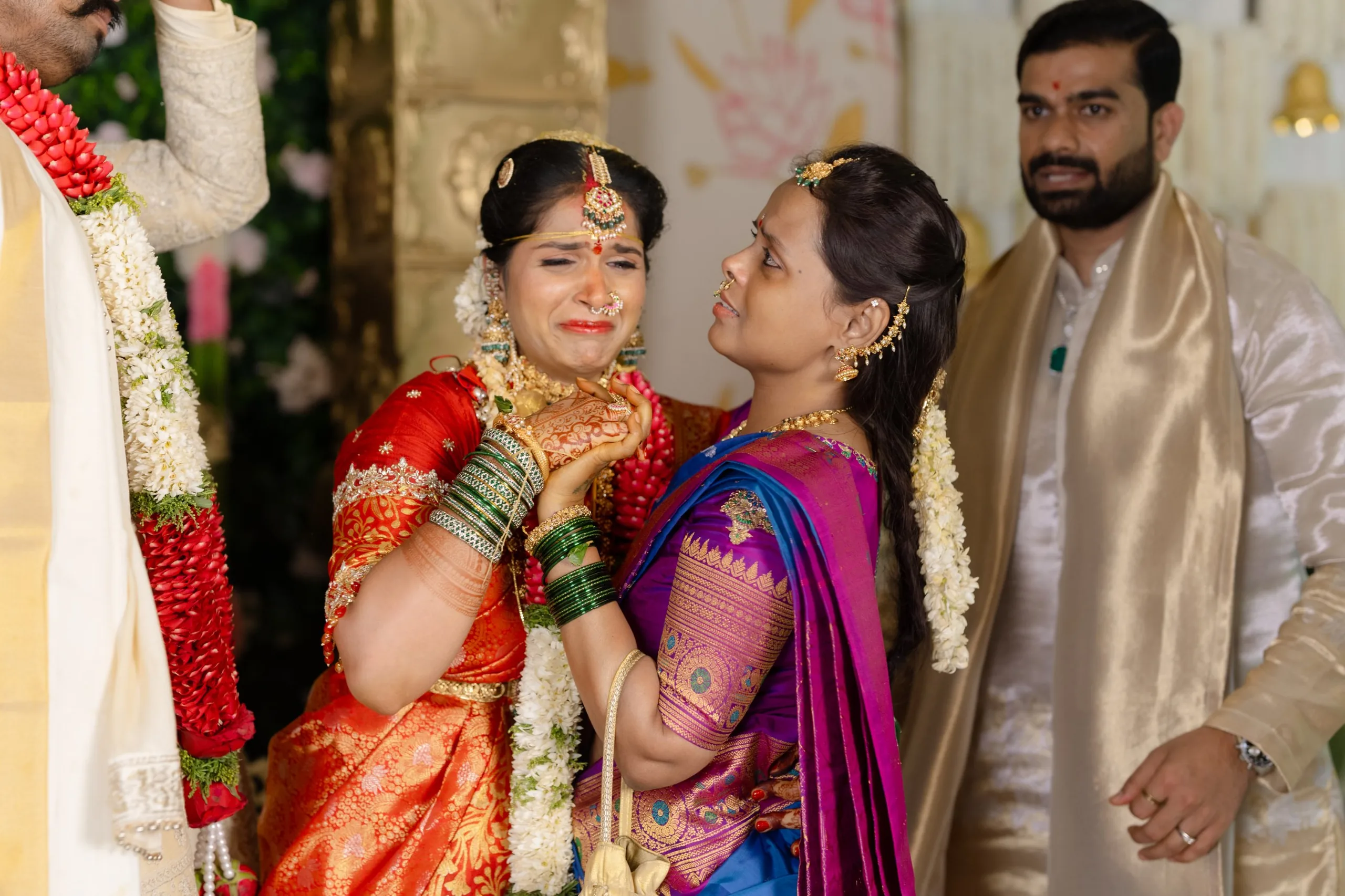
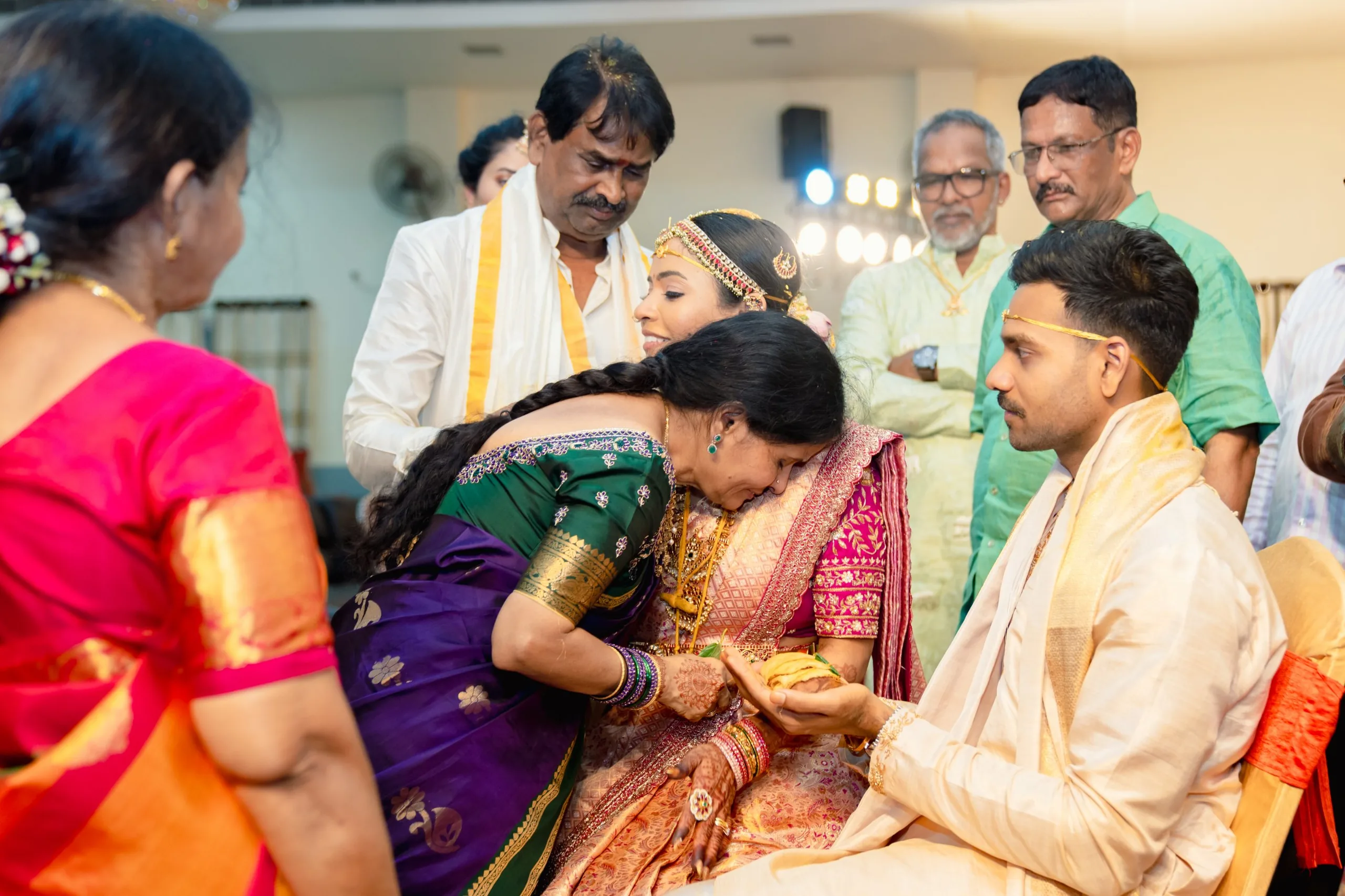
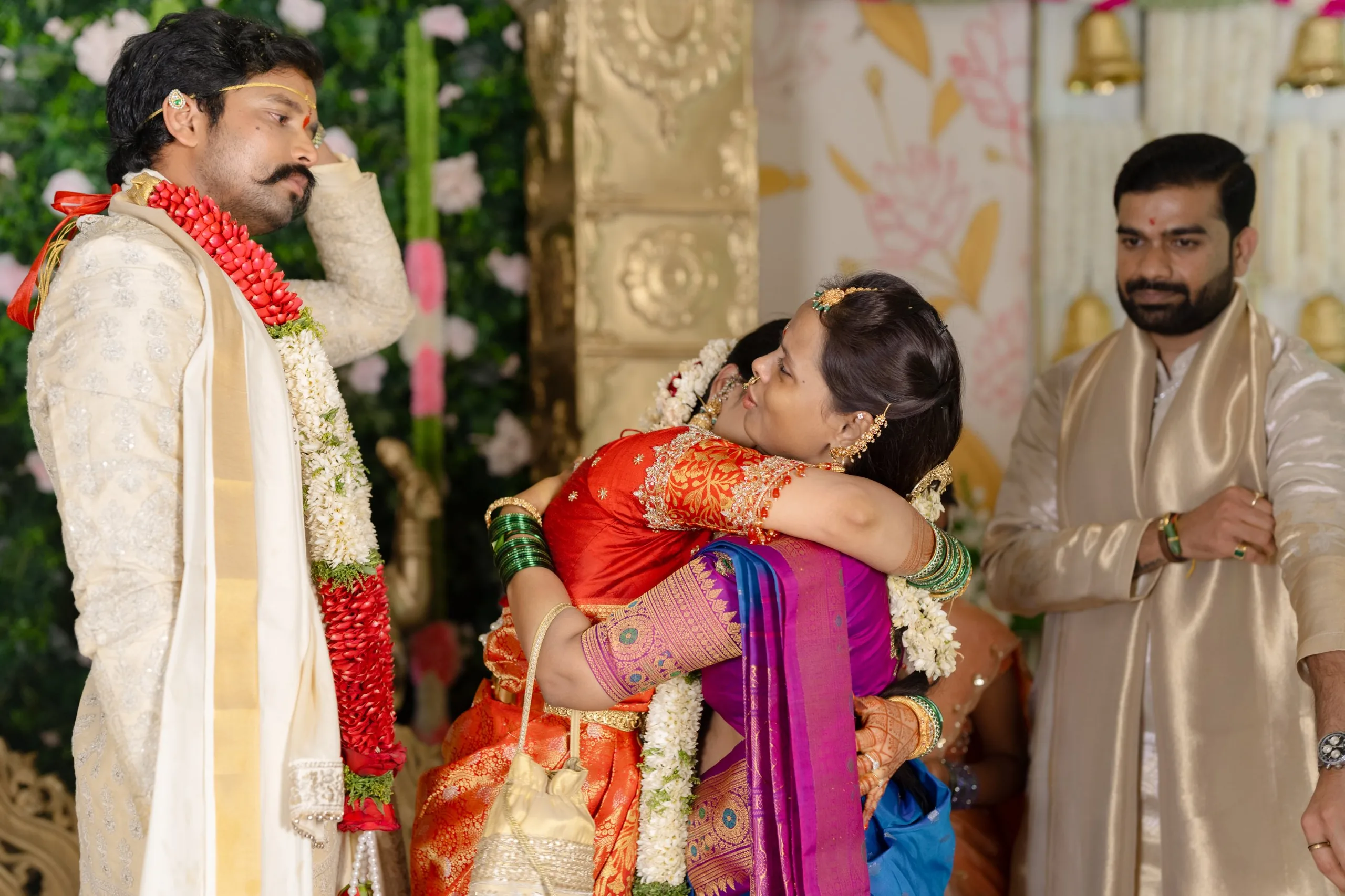
The Appagintalu mark the emotional farewell in which the bride’s family formally entrusts her to the groom and his family. A transitional moment, carrying the joy of a new beginning alongside the emotions of leaving the childhood home.
This kind of ritual requires an unobtrusive and thoughtful approach. There are tears, embraces that last forever, and blessings that carry on for life. We watch these moments, documenting even the smallest touch, to make a teardrop as visible as the emotion was to us on that day.
Every Ritual Deserves to Be Revered and Remembered
A Telugu wedding unfolds like a blooming flower, through many kinds of emotions. From the excitement of the Nischaythartham to the anticipation of the Jeelakarra Bellam, every tradition is a chapter from a story belonging to the couple and the generation who have brought them to this day.
At What A Story, our approach to photography has always been storytelling. The story of traditions being started, carried out, and loved from every direction. We strive to understand significance, so we may bring to you the purest form of the day, in the most memorable manner. We work with couples and families rigorously to plan around the celebrations, coordinate moments with the schedules, and preserve the rituals alongside the candid interactions that make every celebration true to every couple.
Because the photographs you return to years later should hold more than the way your wedding looked. They should bring back what it felt like to be there.
See the kashi yatra, the talambralu and the saptapadi in one wedding: Nishanth & Nithya in Dallas.
Pick a Date , Check for availability
Do you have a date in mind? Or a vision board you’ve been making for ages? Talk to us about it. Book a consultation to walk us through your plans.